Home Systems Components Galleries Store Blog

'Audio Aero'

HRS damping plates on Audio Aero CD players

Tuesday, April 12th, 2011 by Mike

[And here we answer another question, this time about HRS damping plates on Audio Aero Capitole CD players]

Dear Sirs,
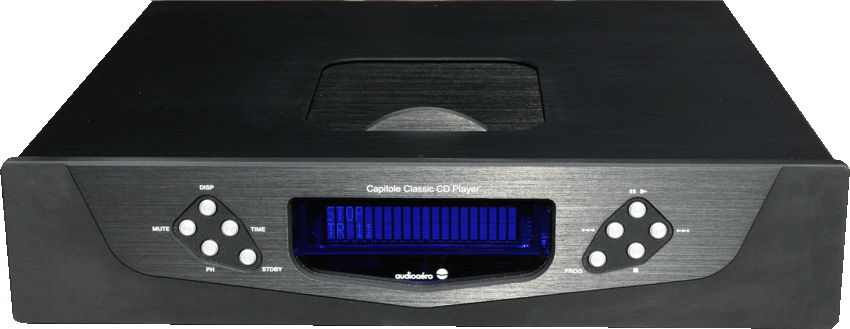
I contact you because I´ve just bought an Audio Aero Capitole Classic CD Player (Similar to the Capitole Reference without preamplifier section. I Attach a photo).
I red that you strongly recomend the HRS Dampening plates. (you wrote: “The player’s sound was somewhat improved with a mid-size damping plate centered on the top of the unit especially with respect to the detail and articulation in the bass extending up into the midrange.. Unfortunately, this requires moving the damping plate every time the door is slid open to put on a CD - but putting the damping plate on the side of the unit resulted in a diminished soundstage and incorrect imaging.”)
As you saw, my AA Capitole Classic doesn´t have the door problem as the Capitole Reference.
I want to know if you still recomend the mid-size damping plate for my AA. I saw other AA owners that use many damping plates.
I will apreciate your recomendation.

Hi X,

The optimal position and number of damping plates on top of the Capitole, or any component for that matter, is usually only found through a process of trial and error. I think this may be because the vibrations found at the top of a component is so unpredictable, depending on the chassis and other aspects of the component, as well as the feet used under the component, as well as the equipment rack itself. The top of a component is kind of the end of a ‘vibratory chain’:… floor -> rack -> feet -> component -> top of component…

We usually recommend that you start with the HRS Nimbus (feet) first. an HRS Isolation Base (if your budget allows) and then tune the final result using the damping plates. The Nimbus feet give an immediate, predictable, no fuss improvement in just about all aspects of the sound - especially under the Audio Aero players.

That said, around here we occasionally do still use damping plates on the Audio Aero players. However, we use them much more often on the much less expensive Audio Note players [at the bottom part of their line] which have lighter weight chassis than the Capitole.

Hope this helps!
-Mike

Audio Aero LaSource photos

Thursday, November 11th, 2010 by Mike


The player is upwards of 50 lbs and very, very solid.


Closeup of the rear panel


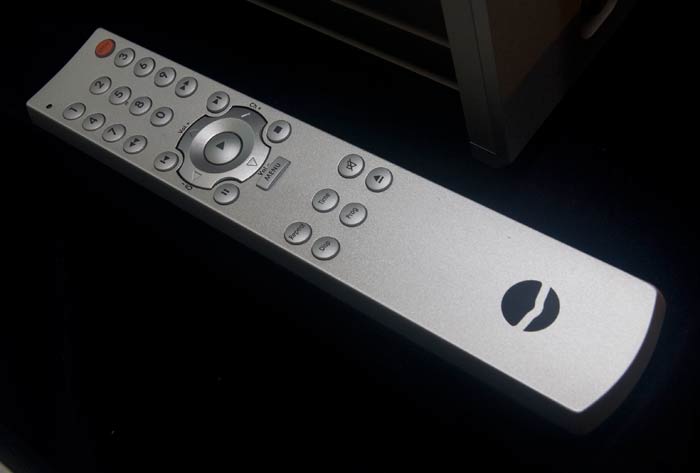
Closeup of the remote control. The remote is not one of those massive metal remotes - which here in a cold climate, I am grateful for, personally.


The player does retain some of the classic Audio Aero styling.


Closeup of the front panel


The bottom of the player. Note that there is a small amount of ventilation there, but otherwise the thick metal of the chassis itself acts as a heat sink.


We wondered in the review whether these might be Stillpoints. Obviously they are not.


We recommend using different feet if you want to hear what this player actually sounds like [yes, extreme words but the shootout revealed there to be an extreme difference when we used 3 HRS Nimbus positioned underneath the chassis, and will send along a free set with every player we sell]

Audio Aero LaSource CD/SACD player: part 2

Sunday, October 24th, 2010 by Mike

SOUND.

The first thing we did was to hook up the player to the Edge NL Reference ‘pyramid’ amplifiers.

We noticed several things. That the sound was warmer and more approachable than it had been with the solid-state Emm Labs player [more on this shortly]. We also noticed a high noise floor between notes. We thought nothing of this, really, since we had just come from RMAF and a system that had the lowest noise floor of any system we know how to build. But it was kind of ‘Oh Jeez, well, this is kind of too bad’ but we had a lot to do and we just let the player warm up for the rest of the evening and into the next day - playing this and that CD in the background - doing careful listening every so often - but no shootouts or anything.

From our past experience with the Audio Aero Capitole and Prestige, we know that using HRS Nimbus underneath the players helped lower the noise floor and increase definition. From my office the sound was sounding ‘out of tune’ [it is often easier to hear this off-axis or in another room, for me anyway]. So I finally badgered Neli [yeah, spouses need to be badgered about 99.9% of the time if you want them to do something when YOU want them to do it] into helping find 3 sets of Nimbus and slide them under the player while I lifted it. It was then that we noticed that the factory-supplied feet looked like Stillpoints and not the standard BDR cones. Regardless, we slid them under [these medium height ones are just tall enough to lift the player off of the feet]. And pressed play.

It was an ENTIRELY different player. My first statement was, ‘Oh no, we just wasted a *day* and have to start our listening impressions all over again’ . Listening from my office revealed that timbre was back into the normal range we hear with most gear. Closer listening revealed that there was now plenty of space between the notes. The only negative, if you want to call it that, was that the sound was not quite as overtly ‘warm’, which was apparently just a lot of notes decaying noisily into the start of other notes. [more about this below].

SHOOTOUT

We did the shootout with the LaSource taking on the Emm Labs CDSD-SE / DCC2-SE CD/SACD player with linestage.

Why is this a good comparison and why is it bad?

Good: They are both CD/SACD players with line stages

Bad: the LaSource costs twice as much as this Emm Labs pair.

Bad: The Emm Labs player we are using in the shootout is a few generations behind the newest Emm Labs players [the shootout SHOULD be between the LaSource and the XDS1 player + new Emm Labs PRE2 linestage - both because the prices would then be approximately equal and because these are their latest and greatest products].

Good: (and this is the real reason) The rap against tubed players [actually this is a solid-state player with a tube linestage - but almost everyone will use the linestage - so bear with me here] is that they are fuzzy, and lack detail, and are inaccurate. So what better test than to compare it with one of the best 4 or 5 solid-state players [the others being mostly other Emm Labs players :-) ]. The CDSD/DCC2 is detailed but not overly detailed, accurate and predictable. Whether you respect these players as much as we do or not, you have to admit that they are a great representative of solid-state player competence with which to compare the new LaSource upstart against.

OK. We had Kevin assist us as he does with many of our shootouts here [thanks Kevin!] Kevin is able to listen carefully and talk about what he is hearing. His preferences are slightly to the ‘Heart’ side of neutral, Neli slightly to the ‘mind’ side of neutral, and me, I think I am in the middle somewhere.

Our test tracks were [we had 4 this time instead of our usually 3, which was good and bad: more test tracks is good, the longer periods between hearing the track on one configuration versus another is bad]:

Sailing to Philadelphia (Knopfler, Taylor; title track [this is wearing a hole in our brains too, but it allows us to immediately compare each player to 100s of other systems, as well as to the other player, and also helps keep us from getting things into a weird state and not knowing it)

Nelson’s Mass (Haydn; King’s College Choir (decca legends) track 1)

Amnesiac (Radiohead; track 2 [track 1 is wearing a hole in my brain, so we are now using #2])

Tumbleweed Connection (Elton John, SACD, track 6 ‘Where to now St. Peter?’)

We ran both players through their internal linestages into the Audio Note Ongaku [yes, 2 linestages in the chain - but it worked wonderfully well]. We put Elrod powercords on the Emm Labs and an Acrolink Mexcel powercord on the Audio Aero. The idea was to kind of assist them in sounding more like the other player: the LaSource will now tend to sound more detailed and the Emm Lab more relaxed and open - i.e. the characteristic sound of these two brands of power cords. We also put HRS Nimbus Couplers under the Emm Labs CDSD transport and DCC2 DAC/linestage to match those under the LaSource.

[Jim P., if you are reading this, this is the same demo you heard except for the power cord changes and the HRS under the Emm Labs - which did make them sound much more alike - but which we do not think in anyway invalidates your choices, but in fact make us more confident you made the right choice for your particular preferences]

IMPRESSIONS

First, we were all amazed at how close the players were to each other. The EMM Labs is much more musical than one might think, given that it is solid-state, and the Audio Aero LaSource had a lot more detail and a quieter background than one might think from hearing their earlier players or looking at their design [aka It Has Tubes!].

We all agreed that the LaSource is a remarkable achievement. It’s a huge step forward from their previous generation top of the line CD/SACD player, the Prestige.

In some sense the ultimate goal, the holy grail [from our point of view] is for the LaSource to sound like an Emm Labs player [aka the best solid-state player] with a little [some amount anyway] of that vacuum tube warmth and soul. To a large extent this is what it sounds like Audio Aero may be attempting to do with the LaSource.

I will transcribe the notes I took of the shootout - in order - so you can get a feeling for the evolution of our analysis of the LaSource sound. We pretty much discussed and agreed to each of these points.

LaSource: Sweet sounding (Haydn). Slightly less air causing voices to be ever so slightly compressed generating a more solid image of the singers (Sailing to Philadelphia). Slightly less micro-dynamics causing some notes to be the tiniest bit more strident, and others to be richer sounding.

EmmLabs: More clarity and voices easier to understand. Again, imaging not quite as solid, less vibrato on the voices and instruments. Surprisingly, only *slightly* less rich. The PRaT here was equal but different [the smaller notes carrying much of the drive of the song on the Emm Labs and the stronger notes driving the song on the LaSource (Sailing and Radiohead)]

The LaSource was complemented here on how fast it loads CDs - much faster than the Prestige [most new SACD players now are quite a bit faster than the older SACD players]

The EmmLabs has less bloom. Soundstage depth was greater (Haydn) [I think that the soundstage depths are differently formed, EmmLabs separated out each violin, the LaSource grouped things together more, but still had depth].

On the Haydn [everything really] the EmmLabs was more real but it could also be a little less engaging [though we HAD heard most of these tracks about, literally, 50 times on EmmLabs in the last 3 weeks :-/]. It depends on how you are listening. The LaSource is easy to listen to [I was going to say more approachable, but my notes has us agreeing that voices were more approachable on the EmmLabs because they were more articulate and easier to understand. Yet, on the LaSource, the voices were more solid and present]. I hope you can start to see how close these are to each other, and also how they are different and in what ways they are different. Perhaps it is more about just how deep do you want to be ABLE to listen and about how deep you USUALLY listen.

Elton John. There was a stark difference here and we all agreed that 1) that Elton track is jaw-droppingly magical, 2) that the magic dust must be in the very subtle details because the EmmLabs picked it up and the LaSource did not [but see note on using the Nordost Odin power cord on the LaSource below], 3) I shock myself thinking about buying a CD, the first in several years [I usually want to get the LP first, and then later get the more expensive CD if I really like it. Besides, we have 4 - 5000 CDs, seems stupid to buy more when there are some here I have not heard for decades. Luckily Kevin left the CD here for us to drench ourselves in]

RadioHead. The EmmLabs picked up the subtle background information [swirlies] that the LaSource did not (+1 for Emm). The voices were more solid and present on the LaSource (+1 for LaSource). The foreground effects [big swirlies :-) ] were more solid and present and tonally rich with the LaSource (+1 for LaSource). So the vote [we listened to all of these several times and had the same discussion every time :-) ] was +2 to +1 in favor of the LaSource in terms of how much fun it was to listen to this track.

Haydn, Sailing to Philly: We never brought these two to a vote, but hopefully from the above, you will understand that there are pluses and minuses depending on how you look at music and how you listen. Since we all listen differently at different times, this can get somewhat confusing - and in some sense that was what we had to deal with when looking at the differences.

A few notes on extracting the last bit of low level detail with this player. Although we had a very good power cord on the player, the Acrolink 7100 series (about $2500) we did try to keep shootout fair. We COULD have used the Nordost Odin power cord to extract MUCH more low level information.

The Audio Aero LaSource, then, is a very good DAC combined with a tube linestage that adds a slight spice of warmth, bloom and soul to the music. It is extremely tasteful in its restraint - just adding enough to ’sweeten’ but not ‘overwhelm’.

People who like the Audio Aero sound will LOVE this player. {{Neli says: It’s got the classic Audio Aero voicing, with better everything — PRaT, detail, extension, lower noise floor. And it’s got one of the big Esoteric drive mechanisms, built like a tank — so we all hope that the transport issues that plagued the Prestiges are over. forever.}}

People who like their system to ALWAYS be fun to listen to, and yet still hear almost the same level of detail as one of the worlds best solid-state players, will LOVE this player.

We will be shipping a free set of three HRS Nimbus, to use instead of the factory-supplied feet, with every player we ship.

Audio Aero LaSource CD/SACD Player w/ linestage: Part 1

Sunday, October 24th, 2010 by Mike

[We’ll get back to RMAF 2010 in a bit.

We only have this player here for a limited time, and we are so very curious about this, their new flagship player, that we just HAD to take it to the Audio Federation gym [listening room] and make it do a few bench presses [play some Redbook CDs], and few chin-ups [SACD CDs] , squats [run it directly into some solid-state amps], … [the workout metaphor is running out of steam here…] and see what it can do. Part 1 will have mostly photos, Part 2 will detail the sound and the shootout we had last night]

The LaSource is Audio Aero’s new CD/SACD player with a built in tube linestage. It lists for $44K. It uses the 2nd best Esoteric transport made. Front to back, top to bottom, Audio Aero has shown that it is not messing around with this player: fit and finish is impeccable. [There is also some great news for current Audio Aero Prestige owners forth-coming]


The player comes in a very large, very heavy [70-80lb] standard cardboard box. Inside is a nuclear war-proof suitcase.


The top and side bracing between the suitcase and the inside of the cardboard box.


The rope and handles are used to lift the suitcase up out of the card board box. It is a tight fit and the suitcase, with the player inside, is heavy.


The player is packed very securely and snugly in the suitcase. The two slots on each side there are very convenient to get the player up and out of the suitcase.


The player has been gotten up and out of the suitcase. :-)


Neli is putting the things back in the suitcase because, although this is indeed more fun than a pile of Birthdays, she has to wait until Mike photographs everything before she opens all of the toys.


Oh, look Neli, the case has cool stuff in the bottom in little cutaways.


Closeup of the cool stuff in the bottom: remote control, gloves, manual, the d’rigor non-audiophile approved power cord. [Neli turned the remote control over so that you all can see it].


The back panel [we’ll have better photographs soon]


The LaSource on the top left of the HRS rack.


The LaSource as most people will see it day-to-day


Underneath the LaSource player. It comes with stock feet that look unfamiliar [instead of the Black Diamond Racing cones that the other players come with], but upon further investigation are not.

Uh. Do not use these unless you like all the voices on the music you play to sound a little like Prospector Pete on Bugs Bunny cartoons and for there to be a lot of fuzz between each note. Here we see HRS Nimbus Couplers holding up the player and the stock feet levitated. More in part 2]


The buttons on the left side of the player


The buttons on the right side of the player


From above.


From below.


From behind

We’re back…. from CES 2009, now for some photos

Wednesday, January 14th, 2009 by Mike

Took more than 5300 photos.

Now to process them and get them up on the site.

Here are some photos of some new products from the lines that we love:


The HRS SXR now comes in silver


This is a good deal easier to photograph than the black SXR. I am in favor. :-) [In fact, it looks surprisingly good - this from someone who usually prefers black].


The new Audio Aero LaSource. A prototype so what you see here does not have the quality finish that the final product will have. [The player with the black finish was featured in our Show Report Dailies.

System Two now has two racks

Monday, March 24th, 2008 by Mike

… and system Three has none.

Both RixRax equipment racks are now over on the second system. We wanted the added capability to compare two turntables, two phono stages, and the Audio Note Ongaku to the Kegon Balanced to the Kegon.


We put the Kehon Balanced amps on the Kharma Mini Exquisites.


The tops have been off so we can stare at the internal electronics for awhile :-) But the tops will be back on soon enough… 1) they take up a lot of room just laying around, 2) the safest place for the tops of the chassis is on the chassis, and 3) just to get the aesthetic effect of a system that does not have exposed tubes.


Since our Audio Note M9 Phono preamp is still to arrive, we are using the Audio Note M1 phono preamplifier to drive the Kegon Balanced. We also had the M1 on the Ongaku integrated for awhile, to get a feel for the sound of the M1 in the system that we are so very familiar with.

The M1 is a very nice pre and I, personally, want to keep it here forever. At the price it sells for on Audiogon sometimes, $700, it sounds more like a $5K to 10K pre - and it always surprises me.

All the low-end AN gear surprises me - I keep expecting a more discordant and harsh sound - like the low end of every other line of equipment. But nooooo, this has more harmonics and warmth than the top-of-the-line, which is more neutral and detailed and transparent and realistic.


The end of the rack is now ALFULLY close to the speaker. But we figure the trade-off is worth it - that we can configure some great sounding systems that we wouldn’t otherwise be able to hear.


The Audio Note Kegon Balanced on the Kharma loudspeakers.


The Audio Note Kegon Balanced. On first blush, the M1 pre + Kegon Balanced amps is very, very competitive with the Ongaku integrated amp.

I would say more neutral [OK, nothing has that 211 sound except 211-based tube amps and the Kegons are 300B-based amps] and more transparent - more separation …and solidity?

We’re still listening…


The Soundlab system without a rack looks pretty darn cool itself. The Audio Aero Prestige is sitting on a Rix Rax amp stand.


Yes, that is a Nordost ODIN between the Prestige and Edge Signature One amps.


The Ongaku is now in System Four in Listening Room Three (L3). We haven’t hooked it up yet - this is still a AN Oto integrated-driven system.

Acoustic Zen Adagio loudspeaker on Kharma amp and Audio Aero Prestige player

Saturday, September 1st, 2007 by Mike

After going through several system configurations, this one was perhaps our favorite, especially of those with speakers driven by solid-state amplifiers.

Adagio speakers on Kharma amps

The Adagios, in this configuration, in this room (that wall behind the speakers is not symmetrical and not flat…) seemed to prefer the more aggressive Kharma digital amp than the more powerful, more laid back, and more expensive EDGE amps. It helped wake them up, so to speak.

Adagio speakers on Kharma amps

All Nordost Valhalla cabling. Yeah, each cable cost more than the speakers… but we save money using the Office Depot power strip, see? :-)

But in the end, this is a fairly reasonably priced system at about $25K + cables.

Adagio speakers on Kharma amps

No, these speakers don’t sound as tight and controlled and have the finesse of the $45-$50K Kharma Mini Exquisite and Marten Coltrane speakers… which just seems to depress our visitors who are auditioning the Adagios.

Maybe we should just hide them next time?

We already go through the ‘You really don’t want to hear these. You’ll be spoiled and will never be able to go back”. Doesn’t work, though.

And we really LIKE the Adagios… what other speaker can you play (successfully) rock & roll AND opera on in this price range? Like none, man.

Comparing and Contrasting Digital at Audio Federation

Thursday, March 1st, 2007 by Mike

In this post, we will not talk about sonic characteristcs, per se, but just the differences in functionality of the higher-end players we currently have available.

Just by itself, the difference in what these players do, and their basic approach to sound, is enough to differentiate them - enough to help many people choose which one they are most likely interested in.

*** Audio Note U.K. DAC / Transport combinations. $[varies]

Tube. If you want a musical, very customizable sound (through tube-rolling), do not need another preamp, do not want to run your PC or video system into the DAC. , and have space for a two component player.

*** Audio Aero Capitole Reference CD player with linestage: $9,580.00.

Tube. If you want a very musical yet unveiled sound, need a good linestage, and do not care about SACD.

*** EMM Labs CDSA CD / SACD player $9,995.00

Solid-state. If you want a very pure yet musical sound, want SACD, do not need another preamp, do not want to run your PC or video system into the DAC, and/or only have rack space for one component.

*** Audio Aero Prestige CD /SACD player with linestage: $12,990.00.

Tube. If you want a very musical, detailed and solid sound, want SACD, need a good linestage, need a front loading CD player and/or only have rack space for one component.

*** EMM Labs CDSD SE and DCC2 SE: $21,900.00

Solid-state. If you want a very pure yet musical sound, want SACD, need a good line-stage, and/or want to run your PC or video system into the DAC, and have space for a two component player.

*** Audio Note U.K. CDT3 and DAC 4.1x Balanced: $22,600.00

Tube. If you want lots of detail with each note rendered in an analog-like fashion, do not need a preamp, and have space for a two component player.

————-

A FEW THINGS

First, these really are some of the, if not THE, best digital today.

Second, the built-in preamp are really quite good. Not spectacular, but really, REALLY good for the price paid.

Third, given your current system, and where you want to take it, you probably have a good idea about going for a tube versus a solid-state solution. The solid-state here is very, very good, very un-solid-state-like, but it will not ‘add musicality’, but neither will it take away musicality [unlike most other solid-state digital]. . It just ‘is’.

Fourth, given a budget, it may be best to allocate a larger portion of the overall budget to a player with a built-in pre, rather than get both a lesser CD player and a separate pre. Not only from a potential shelf space (and extra power cord and cable!) issue, but because it will be find to find a preamp that does what THESE built-in preamps do for anywhere near the money.

Audio Note is coming out with several single-box players, so this will make some choices harder. But for people on a budget, who have a system that they want to keep most of, who know whether or not they like their current preamp, have a preference for a specific-sound, who have limited rack space, the choosing process is really going to be very similar to the list above.

Amplifier Shootout - Audio Note vrs. Lamm vrs. Audio Aero vrs. Audio Note

Friday, February 9th, 2007 by Mike

We held a shootout here a few days ago - $85K Audio Note Ongaku versus $22K Lamm ML1.1 versus $10K Audio Aero Capitole versus $9K Audio Note Conquest Silver. Prices rounded, so don’t quote me to Neli :-) .

The Audio Aero Prestige as serving as CD / SACD player, and sometimes as linestage as well. The Audio Note AN/E Signature loudspekaers were serving as… speakers.

So, with the disparity in pricing - it wasn’t really a shootout. More an investigation into different sounds - how the different amps sounded, given that they are indeed so very different from each other.


We finished up with the Audio Note Conquest Silver 300B amps.

We will try to describe the *differences* between the sounds, as opposed to the sounds themselves.

Going from the Audio Note U.K. Ongaku to the Lamm ML1.1.


The Ongaku and ML1.1 amps resting behind the couch after their workout during the shootout.

The sound was not as big with the Lamm, somewhat more compressed - but perhaps more even-handed because the somewhat rolled-off deep bass [which lends the deep bass a compression-like signature], because of where the speakers were located [in front of the horns, which are out of here as soon as the snow melts. If it melts.].

The Lamm sound was more laid back, the soundstage receeding somewhat, which allows one to better appreciate the music in measured doses when desired, as opposed to being transfixed unable to move for whole CDs at a time [from this description I hope people see that we like both types of soundstaging - really depends on our mood at the time].

The Lamm harmonic color was a little grayer, and the dynamics, as mentioned above, a little less exuberant. This goes in keeping with our general interpretation of the Lamm sound as being stately and sophisticated, natural and self-consistant.

This is not to say that the Ongaku is an exuberant amp either - it is actually quite balanced, unexpectedly so from my point of view, with just a little flavor from the use of the 211 tube. We still have a lot to learn about Audio Note, but it is my current impression that as you move up in the Audio Note line, things become less colored and more accurate and therefore much more revealing of the color and subtleties of the music itself, quite unlike anything else out there. This seems different to me from the brands that, as you go up their line, you get more and more improved versions of their ‘house sound’. ‘Course, you can always tube roll the amp and get just about any sound you want - but I think the point has been made.

Going from the Lamm ML1.1 to the Audio Aero Captitole amp

The Capitole was sweet in comparison with the ML1.1. More euphonic, rounder, less resolution and transparency. For some reason, about half of the people we talk to these days are conscously steering away from high-resolution sound - so this amp, with ‘just enough’ resolution, should really be on everyone’s short list. No one really knows about it, but, especially teemed with the Capitole or Prestige CD player, you can get a really wonderful, Enjoyable and slightly Sweet, sound.

Going from the Audio Aero Capitole amp to the Audio Note Conquest Silver amps


The Audio Note Conquest Silver amps in play. The Audio Aero Capitole amp behind, resting.

Easiest to compare these to the Ongaku.

Less density. By which we mean less resolution, less micro-dynamics, less macro-dynamics, less color. Just less going on. But at the same time, note by note, it was the same: the notes were where they were supposed to be, the rose and fell like they are supposed to, they were just a little thinner sounding. OK, a lot thinner sounding.

Thinner sounding isn’t exactly ‘bad’, though, There is a lightness to the music, very similar to the experience of the $11K Kharma 3.1c versus the $45K Kharma Mini Exquisite, which I think is largely a psychological, not electro-mechanical, experience that is quite pleasant and refreshing. That sometimes a ‘lighter fare’ is as enjoyable, to a listener, as the full-featured experience.

Kind of like comparing the Simpsons [the old shows which had content] with a James Bond movie. One can enjoy both. But one generally prefers, and will actually pay more money for, the Bond movie.

Well, depends on the particular Bond movie :-)

Globe Audio Marketing and Brinkmann North America at CES

Friday, December 29th, 2006 by Mike

A Very Special CES Invitation

Globe Audio Marketing and Brinkmann North America cordially invite you to a very special presentation during the Las Vegas Consumer Electronics Show 8-11 January 2007.

This invitation only demonstration will take place in a private estate with an audio listening room similar in scope and size to what might be found in a normal listening environment. Comprising a WLM active loudspeaker system, Audio Aero Capitole CD player and the Brinkmann Audio Balance and LaGrange turntables, the Brinkmann 10.5 and 12.0 tone arms, the Brinkmann/EMT Titanium phono cartridge, the Brinkmann Mono amplifiers and Marconi line stage and the world debut of the Brinkmann Edison vacuum tube driven phono stage, as well as the Breuer Dynamic tone arm and Nirvana Audio cables. Demonstrations will take place in the afternoon and evening hours during the CES Show and will include a light dinner and product discussion.

This demonstration is in addition to the exhibition at Consumer Electronics Show in the Venetian Resort Hotel Casino suite 29-320 where the WLM loudspeakers Diva, Audio Aero Capitole CD player, a Brinkmann LaGrange turntable, Brinkmann 12.0 tone arm, the Breuer Dynamic tone arm and the North American debut of the RCM Bonasus vacuum tube integrated amplifier will be shown.

Contact Information:

Jody Hickson, Globe Audio Marketing
Email: info@globeaudiomkt.com

Lawrence Blair, Brinkmann North America
Email: information@brinkmann-usa.com


Presented by
Audio Federation

Old Audio Federation Website

email: mike&neli@audiofederation.com
Copyright (c) Audio Federation, Inc.
303-546-6503

The names of all brands of equipment are copyright and/or trademark their respective companies

Entries (RSS) and Comments (RSS).