Home Systems Components Galleries Store Blog

'Jorma Design'

Shootout 2 - Speaker Cables

Monday, May 4th, 2009 by Mike

[we’ll be adding more photos as soon as I find where Neli has put all the Origo cables :-) ]

Speaker Cables 1

OK. At this point we switch to speaker cable shootouts. We compare the ODIN to the PRIME, as the ORIGO was not able to make it to this shootout due to a slight difficulty with respect to someone forgetting to bring it. :-)


Nordost ODIN speaker cable

* ODIN on the main towers.

PRIME interconnect. Valhalla speaker cable on the bass towers.

Eva Cassidy: Easy, relaxed dynamics. We [Neli and I] are not used to this [we had PRIME on the main towers for 2 - 3 years now]. XRAY Vision - can see into the music more.

Chinese Female Vocals: More dynamics. Open and clear. Less resolution. Less fill (especially on voice).

Radiohead: More realistic dynamics. Better PRaT.

Note the ‘Less resolution. Less fill (especially on voice)’ above. I suspected that this was because the ODIN speaker cable was expecting the higher resolution that an upstream ODIN interconnect would bring to the party [and we have noticed synergy between the ODIN cables and their brethren before]. So we replaced the PRIME interconnect with the ODIN interconnect.

* ODIN + ODIN with Valhalla on the bass units.

Radiohead: Amazing depth. More forward. Jim: less irritating [Jim is not exactly partial to Nordost cables, though he has been tempted by ODIN a few times]. Lots of musical threads to follow with my ears. More sibilance [So say my notes, though on the next song they say the opposite. We certainly killed it once and for all at the next shootout or so [see below] when Dylan was one of our test songs [actually, several Dylan songs - it was wonderful. Yes, even the harmonica :-) ].

Chinese Female Vocal: Wonderful, wonderful tone. Less body on the cello. Wonderful voice. The top 1 or 2 experiences I’ve had hearing a voice like that. Less evenly distributed throughout soundstage. Cello had more detail. Better flow. Better PRaT. [did the cables just need to settle? These songs have a lot, a LOT, of sssss’s in the words, don’t they Alex and Teck? :-) ]

Eva: Jim: Not engaging. He was right, Eva sounded bored. I wondered if it was just this song, because if we are hearing so far into the song, we might be able to hear that she really was tired of this song - it might be the 100th time she has sung it this year or she is hungry or something. The next song was better; she was more into the song [Bridge Over Troubled Waters]. You could hear that she liked some parts of the song better than others. Is this real? Am I nuts? Or is the system not quite stable and is having weird affects that make the subtle cues as to the mood of the singer kind of random?

I, personally, think it is indeed real. But I am not sure I want to know that the singer is bored. Frank Sinatra was bored from say, 1962 to the day he died [to my ears]. All of his songs sound like he was just earning a pay check. How many other singers also just go through the motions?

—————————————————————–

Interlude. Jorma Design No. 3 speaker cables

—————————————————————–

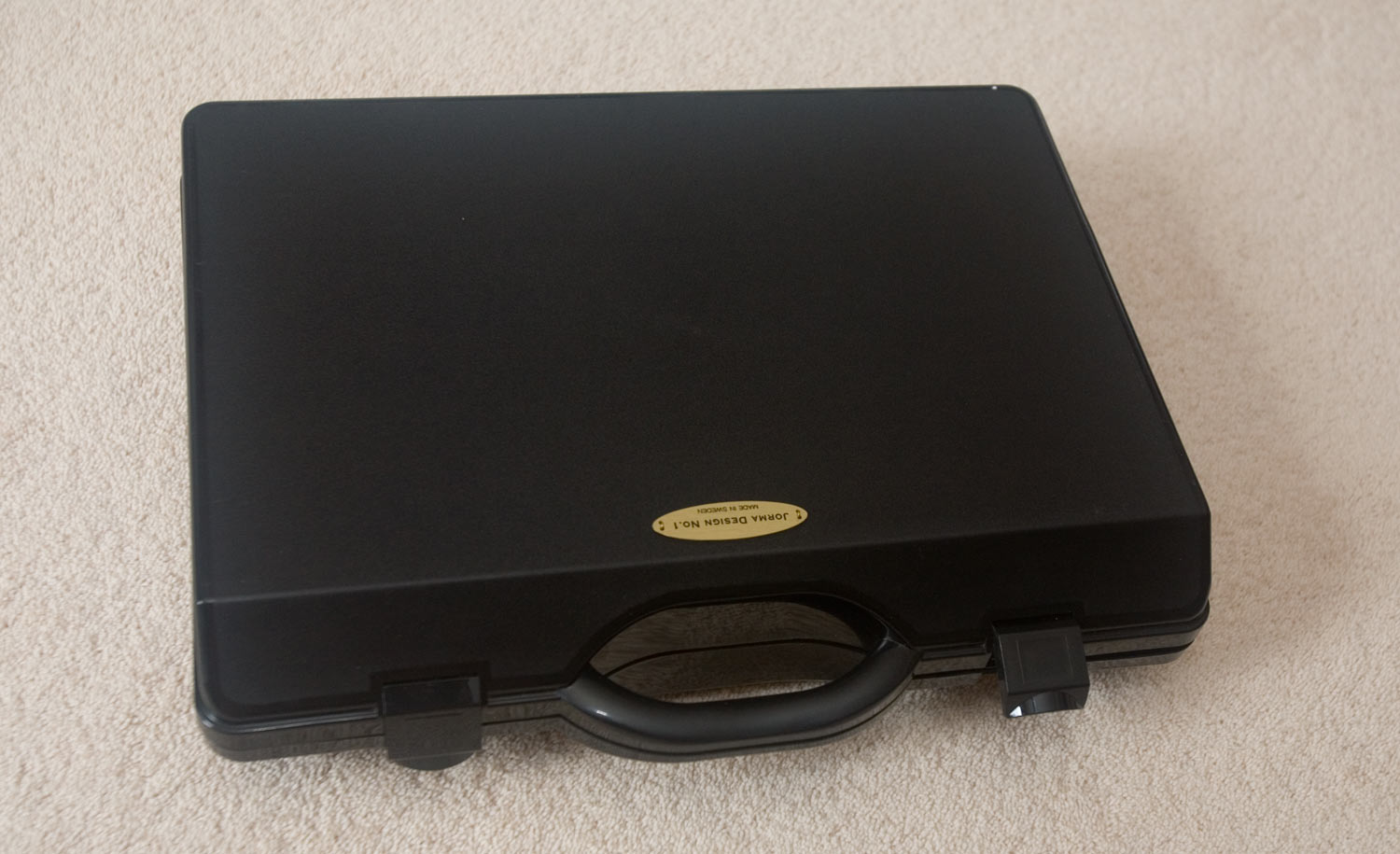
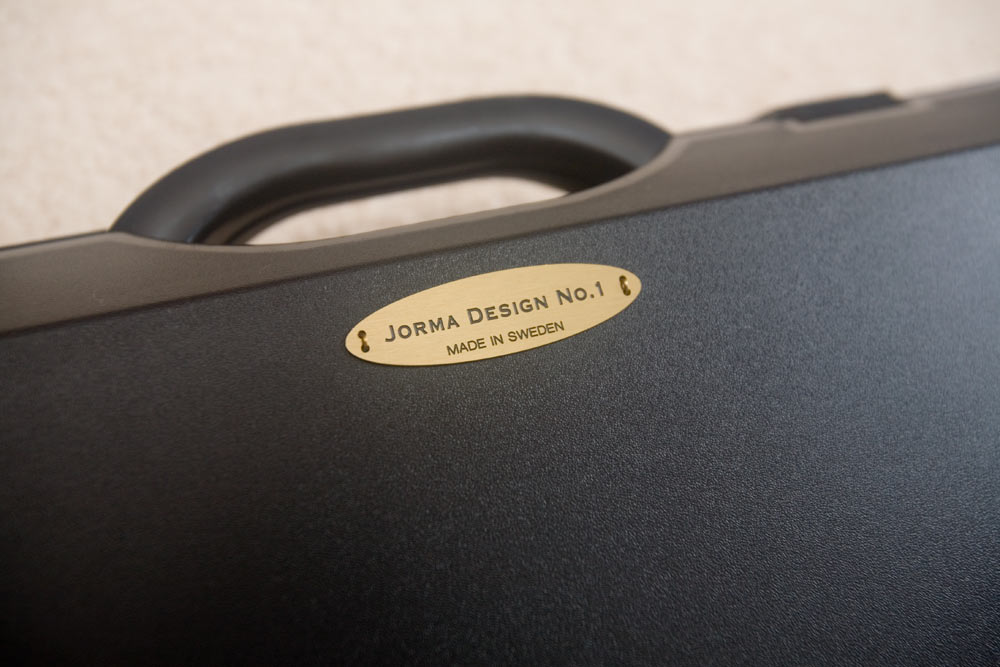
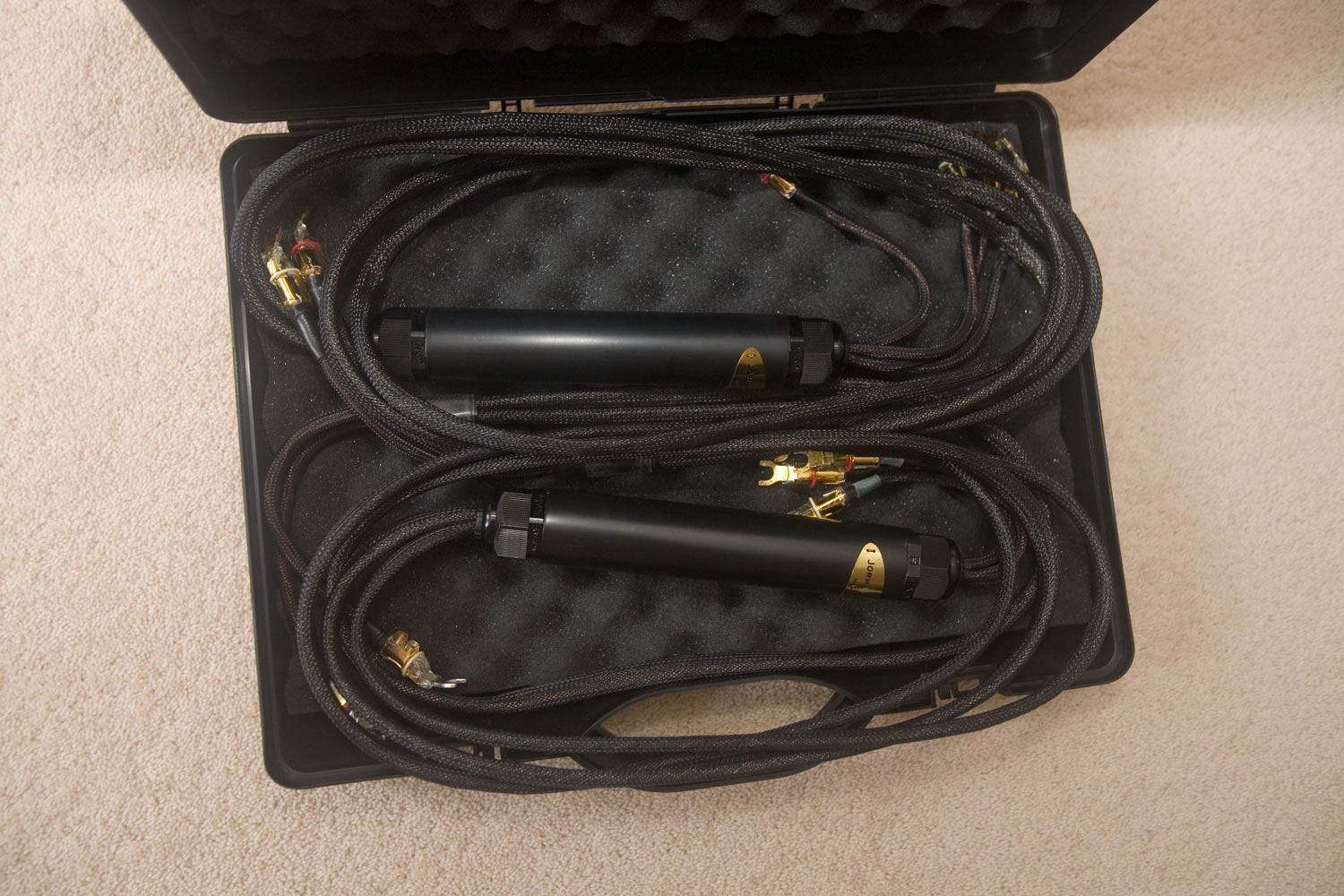
We later compared the Jorma Design No. 1 [in the Valhalla price and performance range] to their No. 3 speaker cables, their least expensive

No. 3 had less resolution, less body, less fill, less color and less subtleties. But it was a reduction in performance across the milieu that was ‘in kind’ - it still had all that Jorma Design approach to music.

Neli: not as side-to-side stable.

Tone is good. Decay is a little fast, anticipatory pause is a little foreshortened. Imaging a little less precise.

We were really happy with the No. 3’s performance. No bad behavior. It still sounded a lot like the No. 1 [and presumably their No. 2, which is between the No. 1 and the, uh, No. 3], just thinner.

Speaker Cables 2

We kept the Valhalla on the bass towers and ODIN is the interconnect on the crossover. The primary purpose of this shootout is to evaluate the performance of the Jorma Design Origo speaker cable.

Current pricing circa this date for 2.5m (not responsible for errors, blah blah blah): No. 1 $6,485 ($9,800 bi-wire). Origo: $10,300 ($19,825 bi-wire)

* Jorma Design No. 1

[one step below Origo][comparing to ODIN speaker cable, which is on the speakers now, and to a large degree PRIME, which has been on the speakers for years and with which we are very familiar]

Dylan: Soundstage blotchier. Good separation and attack. Harmonic a little bright. Needs more resolution to be less bright.

Radiohead: Thinner sounding. Good presence. No where near as smooth. Much less resolution. Less full - but leaves a nice sense of airiness. Thinner voice.

* Origo


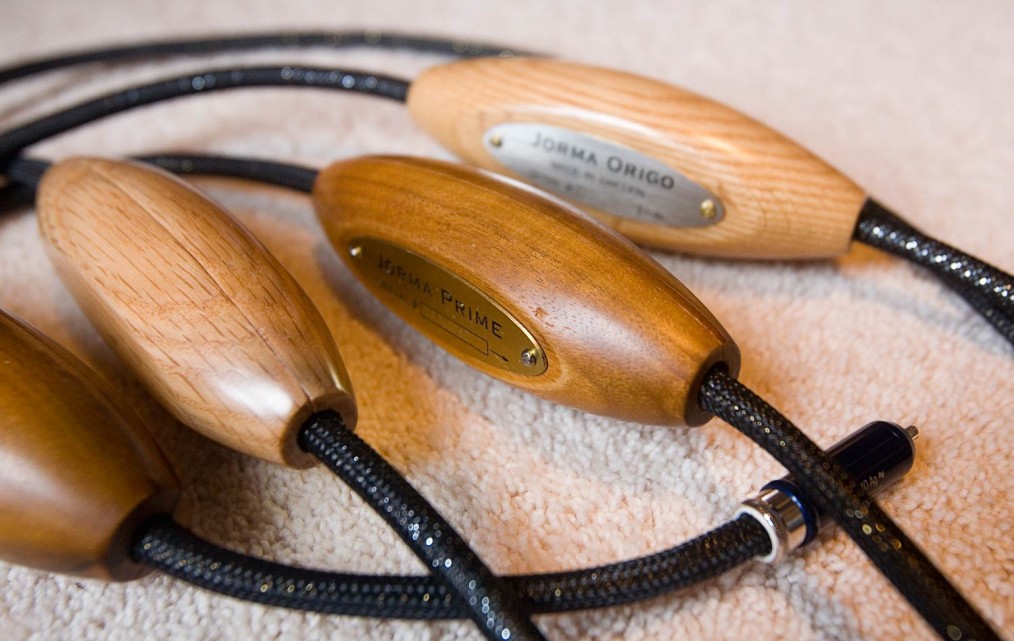
Jorma Design Origo speaker cable

Jorma Kaukonen [I bet Neli just played this to drive me nuts here by having two Jormas to deal with :-) ]: The attack and decay was much more fleshed out. I would say ’rounder’ but that has become synonymous with an attack and decay that is sloppy and uncontrolled. This is well controlled and there is lots of resolution within the attack and decay themselves. Fuller. More real. More harmonic color. Images have more body. More resolution with respect to the images hanging in space. Clean. A happy cable like the PRIME. Much happier than the No. 1.

Radiohead: Lighter than PRIME [we will see]. Good drama and anticipation. Thinner? The voice is pretty [by which I must have meant that the cable is lighter on its feet, highlighting the little affectations of the voice as opposed to the guttural and solidity]. Neli: better PRaT. More solidity. Kevin: Subtle transitions more complete and are therefore more emotionally revealing.

More nimble. Thinner. Less fully fleshed out soundstage, imaging and harmonics. [OK, here I am already comparing it to the PRIME, as remembered]

Dylan: Harmonic pretty good. Almost enjoyable [hey, most of this post is verbatim from my notes, including that. I’ve always thought Dylan’s and Neil Young’s harmonics were very difficult to render properly unless a person really WANTED a headache].

We played 3 tracks from Dylan each time during this shootout. on track 3, there is a ‘chuck’ing/scraping of the strings of an electric guitar that was very irritating and unrecognizable for what it was with the No. 1. Later in the shootout, it was much more evident what it was, and there was actually different harmonics hearable within the ‘chuck’ sound itself.

Neli: More PRaT, clarity, dynamics, separation and detail - the more rhythmic lines make beat more evident. [OK. Neli and Kevin (Jim wasn’t here for this shootout) both started giving me long impressions talking very quickly, and at the same time would talk to each other in a manner not loud enough for me to hear what they said (we played all of this shootout fairly loud. We started loud, and then to keep it fair, we had to keep it loud.)]

Layla (LP): Somebody said turn it up! And it was me :-)

Still unbalanced and not enough resolution on the guitar [note this comparison is with the No. 1, we played Layla while we were getting settled(?)]. Kevin: Heard a lot more. Neli: Duane Allman versus Eric Clapton, can hear different emotion, pain, anguish.

More separation, resolution. More confusing with so much more detail [Kevin and Neli disagreed with me. But this song is all about lots of confusion with a voice and piercing guitar rising above it all. Or so I think, anyway. And my feeling at the time was that more resolution brought the confusion too much into the domain of the voice and guitar.].

* Prime


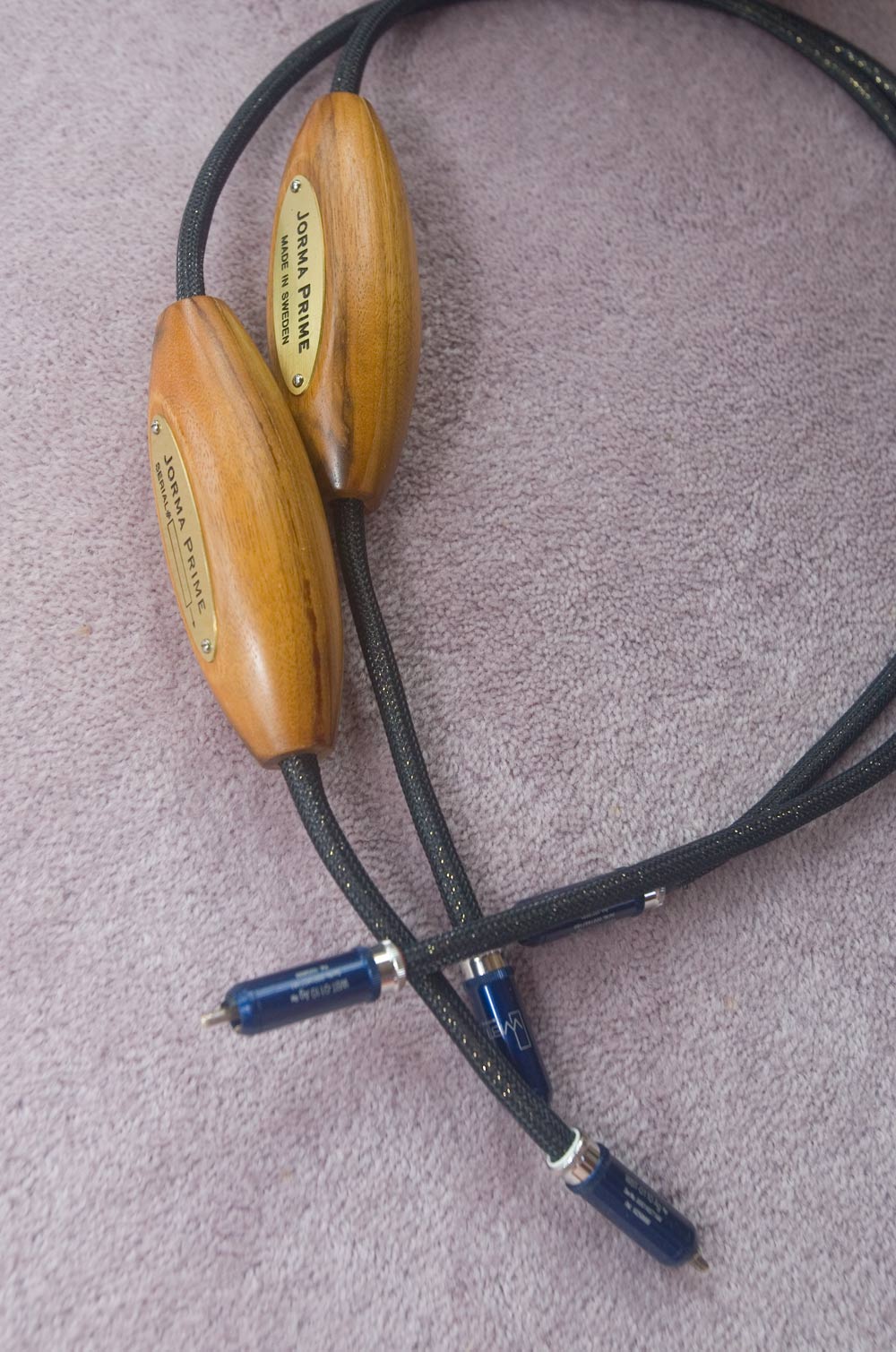
Jorma Design PRIME

Dylan: Voice much more real. So much more body, many more subtle details. It’s a party! Everybody ‘must get stoned’! The emotion and meaning behind Dylan’s words was not apparent [to me] before. His songs are mostly made up of catch phrases, and sometimes whole sentences, that stand on their own and the music and Dylan’s intonation emphasis this. Kind of like Eva above, his emotion changes a lot during a song - but in this case, he is mostly talking to us - and this works because many people have slightly different emotions about each different thing they talk about during a conversation; and even within a single topic, the intonations will vary.

Trumpets sound great. The harmonics cuts through and rises above it all. So much more information in the voice - you can hear what he is meaning as it changes word to word - and he is having a great time vamping a lot of the time. He is having fun, making fun, poking fun, and speaking to us, not singing to us - which is communicating at a different, more personal level.

Piercing harmonica is almost a parody of being musical - it is slightly comical it is so piercing. This is kind of what harmonicas are meant to do.

Kevin: More trademark nasality in voice.

The change to Prime was like moving from and old CD player to LP: much more real and ‘more of a presentation’, this was like a real show was happening in our room. At this point, for me, it was more fascinating than engaging. It was like hearing Dylan for the first time [the first time I really heard Dylan, that I can remember, was at a party in the University student ghetto in 69. Couldn’t figure out why everybody must have stones thrown at them. I was 11 at the time.]

Kevin: Keeps PRaT. Adds Refinement

Neli: Little more laid back than Origo.

Next song: harmonica has so many inner harmonies. Chucking on the guitar is now apparently fully rendered.


Jorma Design PRIME

Radiohead:

Kevin: More space.

Me: So much more detail around each note

Neli: More nuanced [I gave her a hard time for such a common description. :-) She came back with better layering, better density, and fuller bass].

Me: LOTS more ethereal. Sounds a lot more like music than reproduced sound.

Kevin: greater depth of sadness

Me: Violins really apparent and present

Kevin: biggest gap yet between Origo and Prime. [This started some debate as to whether we all agreed on this - or whether No. 1 to Origo was biggest jump in performance. They are both large gaps and, whereas Kevin held his position, I am not so sure].

[My suspicion is that because PRIME handles nuances better, and because Radiohead is nuanced music, that the Prime sounded especially well on Radiohead]

Neli: More organic [Now I REALLY gave her a hard time :-) ]

LAYLA:

The voice came over much more as a real voice. Echo in concert hall much more evident. The compression in the bass is more evident as well [this evolved into me going on - no, I had not been drinking, but sometimes I seem to act like it anyway - about how these Cream and Clapton-like anthems are just going to be like this; a mass of sound with people and guitars shouting with all the emotion they can muster, just to be heard. Their trademark understated anthems. Very unpretentious]

Neli: More body to Clapton before Duane came in [I think that is what she said - maybe I HAD been drinking and didn’t know it]

Kevin: Clapton by himself, more emotional and desperate.

Neli or Kevin: Piano tells harmonic story here in its decays.

Me: tweets at end of song have a dimension, they appear in various locations in the soundstage, and they each move off the stage in different directions.

——————————————————–

So at this point, we have ODIN interconnect and PRIME speaker cable. We are liking it. Hey! We say, “Let’s try ODIN speaker cable on the bass units instead of the Valhalla!”

* ODIN on bass towers

Jorma Kaukonen #9 Big River Blues: Bass more prominent. More open, more integration between main towers and bass towers [which we previously didn’t think needed to be any more tightly integrated]. Bass not as tight, but much more natural. Another layer of gauze removed?! Decay in hall better.

Radiohead #7 [on in Rainbows. Why I wrote the tracks down now and not many hours ago, who can tell]. Less compressed. Smoother? More PRaT.

Best I’ve heard this song sound. A nice ease; bass not needing to be turned down.

Dylan: Decay better in drum, and better hall ambiance. Greater ease to the whole thing - less compressed. Bass more part of song - better integrated.

Kevin: Improves menace and lurking feeling.

Me: More ACCESSIBLE detail in harmonica; can now focus right in - mind no longer has to deal with ignoring bass problems. Somewhere during the night, the harmonica became one of my favorite things to listen to in these songs - so many harmonies - so rich.

Kevin: More extension on harmonics. Somewhere in here, Kevin became an advocate for the idea that it was not only bass that was improved, but the entire spectrum of sound. I eventually proposed a hypothesis that the crossover was being affected by the ODIN cables in a positive way, that the blowback from the bass towers was now a more positive influence on the crossover, which affects all frequencies. The other hypothesis, that the bass frequencies being better influences other frequencies at various multiples of their frequencies, is also out there on the table for us to ponder as we switch back to Origo once again, but on the bass towers]

* Origo on the bass units

replacing ODIN, with ODIN upstream interconnect and PRIME on the main towers

More compressed, and less open, not as much separation. More bass texture, rounder, more definition. Music further back in hall.

Neli: Much leaner. Was Valhalla better?

Brain fried from listening to so many things. I personally can’t remember that far back. What we do is put the ODIN speaker cable back on the bass towers. The next day we rearrange several things to put the ODIN power cord on the crossover/bass-amp. This caused another jump in ease and openness and separation. Perhaps not as much as we hoped, but the PC is still in its position because currently that is the most optimum place we know to put it.

——————————

Fini

And that concludes the report of the findings at our shootouts at this time. Thanks go to Rick and Jim, especially Kevin, Dan, and, uh, oh yeah, Neli :-)

What fun was had by one and all. Have to do another one of these, and soon.

Shootout 1 - Introduction and the Interconnects

Monday, May 4th, 2009 by Mike

In one corner, weighing in at…

This shootout is primarily focused on Jorma Design cables. We compare and contrast their cables with their other cables, at different price points, as well as with the correspondingly priced Nordost cables.

This is another shootout that went on and on and just would not end [kind of like real shootouts - wouldn’t everybody at the OK Corral just hide behind something and fire a round every so often hoping the other people would just go away? Oh, but I digress]

Like I wrote before, this is based on about 16 hours of listening, with several people in attendance much of the time, and about 23 pages of notes [aka scribbles].

Why so long? Why so many notes? Thinking about it, it makes sense if you realize that we compared 6 interconnects against each other and 5 speaker cables against each other.


Upstream: This part of the shootout we used the Audio Note CDT Three transport and Balanced 4.1x DAC, Lamm L2 linestage, 10m Valhalla interconnect, Powered by an Nordost ODIN PC on the DAC, several ELROD PCs, all plugged into a Nordost Thor. Later we used the Brinkmann turntable with Lyra Titan cartridge, Valhalla PC on the Lamm LP2 phono, and the EMM Labs CDSA digital.

We also wanted to pay close attention to the differences, so that once and for all we would know what to expect when we propose inserting one cable for another.

One hopes, when one does these things, at least from a dealers point of view, that the more expensive cables sound better than the lesser prices cables, and that the performances are spread out more or less evenly, and correspond closely with the manner in which the prices are spread out.

Bargains!

And that is what we found [whew!] except that the performance of the Origo 1 meter interconnect [longer lengths increase the price rapidly] kills the competition at the $4K price point, including their own No. 1. It costs only $5200 and therefore represents a significant price/performance bargain.

This is similar to the Audio Note PALLAS 1 meter interconnect at $4500 [for use as a phono or digital cable] - either could go up several $1000 and still be good values. Just a heads up, people.

Interconnects

* Jorma Design No. 1 balanced interconnect.

Our first attempt to hear the No. 1 was on the back of the Audio Note Kegon Balanced. Previously we had the much more expensive single-ended Jorma Design PRIME on the back using a Purist Audio RCA to XLR adapter. What this taught us was that the adapter, previously thought to be only somewhat damaging, was voted off the island. Without the adapter, the sound was more open, relaxed, better macro-separation, better spacing in the sound stage, etc. Not as much resolution, or harmonic color, as the PRIME through the adapter, and in the end the PRIME probably sounded better - but seriously, the adapter is for emergency situations only.

After this particular shootout, we exchanged the Kegon Balanced for the Lamm ML2.1, which handles single-ended RCA and balanced XLR cables more or less with equanimity.

* Nordost Valhalla Balanced interconnect

Dire Straits and Radiohead: The soundstage was a little closer to the listener. More presence in the center position and less presence at the left of center, right of center positions. Neli thought it sounded more open and cleaner. I thought it sounded slightly more compressive. If you figure that our exactly opposite opinions cancel each other out - then you can rightly conclude that these two cables are remarkably similar to each other.

Opera: The singer is always quite distant in this piece, and my notes say 39th row. One might say that Valhalla accentuates the distance of the musicians from the listener, bring them closer or further away. Conversely one could say that the No. 1 dampens or moderates the distance. For my personal taste, I think I could care less either way - so I’m just saying they are different so that you, the reader, are well-informed. Valhalla has a slightly more powerful leading edge, which lends it to sound more substantial and powerful than the No. 1. The tops of the notes are slight muted in comparison to the No. 1.

* Jorma Design No. 1 balanced interconnect.

According to my notes we went back to the No. 1 again. Aren’t we thorough. We probably played things in reverse order, as we zig-zag through our 3 musical selections. The No. 1 seemed lighter-on-its-feet. Neli: better harmonics. Being a little quicker, and at the same time a little lighter presentation, gave the voice better articulation, more emotion and there seemed to be better separation. Neli: more veiled [maybe but I’ll lend her a couple of q-tips anyway].

The conclusion here, I think, is that in the spectrum of cables going from powerful sounding, like the Acoustic Zen and Audio Note [and other reasonable cables out there] to the lighter sounding like the Stealth INDRA, these 2 cables are close together, but the Valhalla being on the more powerful sounding side of the fence and the No. 1 of the more deft side of the fence. Note that the PRIME and ODIN have left the planet and are not on either side of the fence.


The Prime and Origo interconnects

* Jorma Design Origo

Funny ears are. We sat and listened to this on several cuts, as you will read below. It was easy to convince ourselves that the PRIME couldn’t be better than this. Listen to all that resolution, that even-handedness, that emotion. Uh, oh, Jorma Design has made this cable too good and nobody is going to like the PRIME anymore.

Of course, Neli and I had our suspicions that the PRIME might just be better than people thought - but how MUCH better was and is really hard to guess unless you do a shootout like this and compare them back and forth [or you live for one for a while and then do the switch insitu].

As it turned out, the PRIME killed the Origo in several different categories - but this just goes to show that 1) a person can be happy with any properly performing cable [not that there are many properly performing cables out there], and 2) unless you already have the very best cables, and even though you are more or less happy with what you currently use, an upgrade will make your system sound worlds better than it did before.

Anyway. I wrote only 2 words for the first 5 to 10 minutes of listening. Fuller Resolution.

I have been noticing lately how the better cables seem to fill in the music, making lesser cables seem weak and anemic and a sketch of the musicians instead of real-solid people.

Some of this has to do with resolution, obviously, but it is like looking down on a mountain range, and seeing only the peaks, versus seeing the valleys and the trees as well as the peaks. With lesser cables, the main players are on the stage, you can hear them, point to them, describe how far away they are, etc. With better cables, you can see the guitar, and stage, the auditorium… all the spaces in between are filled in.

Similarly, I think we could also think of it as only hearing the peaks of each note with lesser cables, compared to hearing much more of the lead-in and decay with better cables. Everything is filled in better.

Radiohead (House of Cards - what a weird song, they try and make the system sound broken by putting lots of sounds of things rattling around in the mix)

[Compared to the No. 1] More resolution. More full. Soundstage more filled in. Less cloudy. More sibilance [see below ***].

Kevin: More ghostly voice.

At this point, the Origo was so much better than the No. 1, there wasn’t too much need to describe it further - and with the change to the system [detailed below] kind of invalidating backward comparisons anyway, we are really setting the stage here for comparisons to our next cables: the PRIME, ODIN and INDRA.

Chinese Female Vocal: More separation, More midi-dynamics. Kevin: More subtle intonations in voice.

Eva Cassidy (Tall trees, Georgia) More immediate, veil lifted, more real - here in the room. Kevin: More hall ambiance.

* PRIME

Rachmaninov(?): Smoother. Better flow, better subtler texture. Not as rough. Kevin: more forceful, better start and stop. Neli: Better separation. Neli and Jim: More emotional. Neli: properly highlights soloist.

Chinese Female Vocal: More space. Subtle changes in loudness are more apparent, like when she performs a vibrato. Kevin: richer [I agree]. More intensity in midrange.

Radiohead: Neli: Better PRaT. Kevin: Juicier. Me: More subtle clues that this is a real voice.

* Stealth INDRA


The INDRA

Edgier, Grittier. Good tone. Some sibilance. Less controlled and muddier than Origo. Good separation. Some clustering around Left, Center and Right. Kevin: More forward voice. Neli: Good delicacy in the highs [yes].
[*** We switched power cords on the Marten Coltrane Supreme crossover/bass-amp box to the more expensive Acrolink from Valhalla, which cleared up most of the sibilance. We hardly ever get sibilance, and it was with surprise that 1) we had sibilance all of a sudden in the first place [although usually the crossover is on an HRS platform, which probably usually helps some to prevent this from happening in the first place :-) ], 2) that this change in power cord such a large effect on something we thought pretty much sounded the way it sounded and nothing was really going to affect it much. We now have an ODIN power cord on the crossover/bass-tower-amps box. Oooo-la-la it is good].

With this change to the system [detailed above] kind of invalidating backward comparisons anyway, we are really setting the stage here for more intense comparisons of the cables: the PRIME, ODIN and ORIGO.

* ORIGO


Origo and Prime

Many good things. Less separation in the highs, less focus on the highs than the INDRA [the INDRA is really good at this - very light on its feet in the upper registers - which makes it not so good as a tonearm or digital cable, but great everywhere else]. The Origo is more of a whole. More body.

* ODIN


The Odin interconnect on the Lamm ML2.1 amplifier

Classical: Better balance between instruments. More dynamics. The violin is much more realistic.

Chinese Female Vocal: The voice is very 3D. The decay of the notes on the cello is amazing.

Eva Cassidy: Can hear the interaction between Eva and the microphone. Lots of subtle clues here make it seem like you are there. The dynamics are very real - a little abrupt like the mic is being overloaded slightly - very real.

* PRIME

Eva: To me the Prime harmonics has a slightly orange color. The ODIN is white with a tinnnnnnnny bit of blue. More focus on the midrange than the ODIN. Less hall ambiance. Less “light” on the presentation - more laid back. Jim: better highs [which the rest of us disagreed with - the PRIME is slightly rolled off compared to the ODIN - but I put this here because he heard something in the highs he liked better than with the ODIN]. Kevin: more exuberance.

24 Pages of Notes on about 15 Hours of Shootouts

Sunday, April 26th, 2009 by Mike

These shootouts focused on primarily Jorma Design interconnects and speaker cables, [the No.3, No.1, Origo and PRIME but not the No.2], and Nordost ODIN interconnect and speaker cable kept appearing [largely because everyone was curious and as a kind of reference standard] and INDRA was thrown in once in awhile.

The Audio Note PALLAS was not part of the shootouts - it has kind of been relegated to the ‘ridiculously excellent price/performance digital/phono cable’ category [a category it now dominates]. Perhaps we are mistaken to relegate it so. We need to try and throw it in as a regular interconnect sometime.

None of the other Audio Note orNordost cables were shot at because, well, this was really about evaluating the Jorma No. 3 and Origo and we needed to focus on something … otherwise we’d be here all year doing the shootouts [awwwwww :-) ].

A quick summary:

Origo [or-eh-go] means origin in Swedish. At about $5200 or so the first meter the interconnect kills things at the $4K level. It is not the PRIME [at $10K] - but it has lots of resolution and is very open and clean.

The No.3 [their least expensive cable] is very much a cable that sounds like its more precious siblings - just somewhat leaner and with less resolution, and with less presence and image specificity - but the tone is still spot on [just not as rich] and it is quite clear sounding with above average separation.

Using ODIN interconnect to go from the Marten Coltrane Supreme speaker crossover to the amps [Lamm ML2.1 in this case], and Jorma PRIME speaker cable on the main towers and Nordost ODIN(!) on the bass towers is now our favorite setup.

The full shootout report will be forthcoming…

The Cable Shootout Results will be Forthcoming

Tuesday, April 21st, 2009 by Mike

As many of you know, and many do not, we have been conducting a large number of cable shootouts. They are many focused on the new Jorma Design ‘Orego’ cable that sits between their No. 1 [approx. Nordost Valhalla pricing and performance] and their statement PRIME cable.

Also thrown in are the Nordost ODIN [well.. why not. Wouldn’t you?] and even the Stealth INDRA [interconnect]. We are shooting out with both interconnects and speaker cables - and of course, various combinations thereof.

Hopefully later this week we will have the report up… here I think. Neli says I am not posting on the blog enough, so…. I’ll try and post store-ish stuff here and ramblings and philosophy and humor and perspectives on the magazine.

New Coltrane Soprano and Jorma Design Origo

Wednesday, January 7th, 2009 by Mike

A few preview shots on Neli’s camera.


Coltrane Soprano. $45,000.00.


Jorma Design Origo [Jorma Design Prime without the bybees]

How Much Fun

Thursday, March 27th, 2008 by Mike

We have so many things in the queue … so many things lined up to try, that it gets a little overwhelming. The exact sequence of things gets a lot of discussion and seems to be updated on an almost hourly basis.

We have:

1. Compare the charged ELROD powercord that has been on the Nordost ViDar cable burner to a charged ELROD that has not been on the burner - i.e. How does the ViDar affect performance? We already did the cold (uncharged) Vidar’ed ELROD compared to the hot (charged) un-ViDar’ed ELROD. [Note, ELRODs take about 3 days or so to charge up their capacitors]. While this was ijntersting, and we will report on it, not being the brightest bears in the woods, we finally realized that this was kind of confusing [I bet you are confused, too, by now :-) ], overloading the charged versus uncharged test with the Vidar’ed versus un-Vidar’ed test.

I said it was fun. But it also requires a degree in Research Methods… apparently.

2. Compare the Kegon Balanced with the old high-gain Kegons. We can do this on the Kharma Mini Exquisites - which we anticipate will show that 1) … well, let’s not make any predictions [see, I’m getting smarter. Maybe there is hope…]. But the Kharma is actually quite hard to drive, especially the bass - especially if you want that big open Kharma sound [Kharmas always sound exciting and delicious and big, but not always that room pressurizing wrap-around that many people crave like hot butter on potatoes].

3. Compare the Nordost ODIN speaker cable to the Jorma Design PRIME speaker cable on the Marten Coltrane Supremes. This will be… well, there may not be a winner. I expect the ODIN to be more dynamic, which the Supremes love, and the PRIME to be more detailed, which the Supremes love. But for all I know I am getting it exactly backwards. That’s what shootouts are for. Proving it one way or another [at least with respect to the equipment we have here - we do try to perform part of a shootout on a completely different system to make sure that out results more or less reflect the general case].

4. Compare the Kharma Mini Exquisites to the Audio Note SEC High Efficiency Signature speakers. OK, yes, completely different… but both are 2-ways and, well they were the same price but now the Minis are $60K [seen the dollar lately?] and, well the AN speakers are… we’ll know when Neli gets the price list out [uh, oh, she’s gonna smack me when she reads this… I am already bracing for the impact… hurry up and finish this so I can delete it before she sees it :-) ]. I expect the Kharmas to be more detailed and the AN more dynamic. Duh. AN is almost horn-like and Kharma has that legendary midrange resolution. But what else will we hear?

5. Compare the M1 phono stage to the Lamm LP2 phono preamplifier. OK, Neli thinks this test is stupid too… but I want to hear the difference in character between the two. We’ve had a number of other inexpensive and expensive phono stages in here, so this is not all THAT outrageous.

6. Compare the old EMM Labs CDSA to the new one with the upgraded transport and feet. We should be getting close to getting 700 hours on the new CDSA soon now, one would think [I don;t have a little 700 hours cooking timer on it or anything].

7. Oh yeah, we still have to do the interconnect shootout where the signal is quite large, between the preamp and the amp. We actually point to a system periodically and say ‘oh, this would be a convenient time and configuration to perform the aforementioned test’ [well, we don’t use the word ‘aforementioned’ in casual conversation, sorry]. But do we sit down and do the shootout? Noooooooo. It does take about 6 or 7 hours of focused concentrated listening, so it is hard to find the time. But soon….

8. We want to compare the high-power ELROD powercords to the low-powered ones on the Lamm ML2.1. At what point to low-powered amps draw high-power? Just what IS the difference in sound between the two?

9. I am sure there is a 9. And 10….

Digital Cable Shootout

Monday, February 18th, 2008 by Mike

A digital cable shootout without any digital cables… but we won’t let THAT stop us…


The room showing the listening couch (I sat in the sweet spot behind the couch on a chair that puts my ears on a good level].

Neli, Kevin (thanks! Kevin) and I shot out 7 (SEVEN!) cables last night in a marathon listening session.

The cables were each substituted, some of them twice, between the Audio Note CDT Three transport and DAC 4.1x Balanced. The signal then ran through a Valhalla interconnect into a Lamm L2 Reference line stage. From there through 10 meters of Valhalla to the Marten Coltrane Supreme loudspeaker’s crossover box. Then through Nordost ODIN into the Lamm ML2.1 amps. Finally, that nice old signal completed its mission through Jorma Design PRIME speaker cables.

We played, over and over again till we was about to die, three cuts: Mark Knophler’s Sailing to Philadelphia track #2, Rachmaninoff track #6, and Radiohead Amnesiac track #2. Neli and I know these cuts REAL well, and Kevin knew one of them [and now all of them :-) ] really well, so these particular cuts helped us focus more on learning about how the songs sounded versus on learning the songs themselves. We played CD 1, then 2, 3, 2, 1, 2, 3, 2, 1 in this pattern so that we would here some of the tracks back to back on different cables.


The PALLAS is still on the system this morning.

Neli did all the cable swapping, about 10 swaps in all. It took about 6+ hours. They went and got Vietnamese take out at about 2/3 of the way through. Yes, there WERE complaints about chewing sounds getting in the way of the listening. For my part, I just could not IMAGINE what Neli was chewing that would make such a noise. But, to rapidly continue on…. ;-)

The cables finished the shootout in this order. Note the 3-way tie *(which we can help break for you based on your individual preferences, perhaps) and how the SOOTTO seemed to do better as a low-signal turntable cable compared to this one (that may be because this system, the Coltrane Supremes specifically, really likes to show off top-to-bottom detail and clarity - the SOOTTO being more about solidity and dynamics and color. As mentioned below, after some thought, it is perhaps the Kharmas love of dynamics that boosted the SOOTTO into a tie for first in that system]:

[[[Nordost Odin, Jorma Design PRIME, Audio Note PALLAS]]], Audio Note SOOTTO, Nordost Valhalla, Stealth INDRA, Audio Note SOGON.

Hopefully I will add some photos here… but… oh, I am!

*** Nordost ODIN. ***

Both the Odin and the PALLAS were doing things that we all found a little hard to get our ears around. I think that is both because they are relatively new here and that they are both breaking new ground in terms of what they can do.

The Odin was the clearly the overall audiophile performance winner. Front to back depth and separation was so good it took some time to get used to. The clarity was other worldly. The even-handedness up and down the frequency spectrum. The precise imaging. Precise harmonics. This is the only ‘competent’ interconnect, just like the Coltrane Supremes are the only competent loudspeaker - they just do the things they should be doing - nothing less, nothing more.

So why the 3-way tie then?

Was it just because we were tired of getting dry-mouth, forgetting to close them during all the ooohs and ahhhhs as we listened to the ODIN?

Yes.

But it was also because we really liked the intense color and apparent humanity of the human voice when using the PRIME (Kevin called it ‘Vivid’), and the ‘rightness’ and cohesiveness of the PALLAS.

We are very familiar with the PRIME, and the sound was therefore more accessible to all of us - it sounded like our system was sounding REALLY EXCELLENT with these cables. With the PALLAS it was like being there (especially the Rachmaninoff) and communicated much more of what I thought the musicians were trying to communicate - their interplay, the threads of melody, the stage - much more like REALLY being there than I have ever heard.

The Odin was more like… WTF! So THIS is what this recording sounds like. Seems like we need to reposition the speakers because we are getting some soundstage fuzziness… there… and THERE! [True.We do. The bass towers between the main towers is just not working out so well where we have them. We either need to to move the bass towers back or to the outside of the main towers].

We would be happy with any three of these cables. They all sounded excellent. The 10th time we played each song was as entrancing as the first - even though my brain was melting and it was hard to analyze what I was hearing at the very end anynore [but the last few songs were just a confirmation pass - yes we DID hear what we heard during the first pass, and yes, it is still quite nice thank you].

The Odin would, however, push us to optimize the rest of the system a little sooner - it being such a good window on what is actually on the source media. Just like the Supremes have forced us to continually improve our system. These definitely are pushing the audiophile envelope - raising the bar of what CAN be done with a high-end audio system.

*** The Jorma Design PRIME ***

Neli says there is chocolate on the Prime, and then she looks at ME(!) Now I ask the world, who is the chocolate addict in our house? No it is not me :-) [But I guess I do eat protein bars that have a chocolate coating… Oh no! Banished to the audiophile penalty box!]

This will be the hardest to write, I think, because we are SO familiar with the sound - I will have a tendency to skip over some of its attributes. On the other hand, Kevin was there, and he brought up things about this sound that was a reminder to me… Oh yeah, they DO do that don’t they.

That said, each time these cables were put on was a joy. We have NOT grown tired of what they do. In fact, it was still a WOW experience.

First off, the voices. The voices on Radiohead, for example - but the Knopler too, were clearly better than the voices with any other cable. The HUMANITY of the voice stood out. This sounds like a real person! Somehow the balance of the frequencies and resolution just works. The throat and chest and gutturalness was just perfect.

There was also a lot of color to the harmonics. Not overly much - in fact just the amount that I want to hear. For example: A lot of notes in music are just plain ‘fun notes’. If you had a button and it made this sound when you pushed it - you’d be sitting there all day pushing it over and over and over because it sounded so cool. Knopler ’s guitar, a lot of the sounds [but not all :-) ] on Radiohead, some of the violins on Rachmaninoff. Just like a kid we would be. Pushing that button over and over. But a lot of our systems leave out the ‘fun stuff’ in notes. This cable emphasizes the fun stuff.

This cable also had excellent separation, side-to-side and front-to-back. details were sufficiently plentiful that it kept us engaged as we continued to find new ones - new depth and characteristics of the performance - after the 10th [1000th] time we heard the track, etc. etc. [See, I TOLD you this is hard to write down everything we know].

Not as delicate sounding, not as much finesse, as the other two top contenders [something we thought we’d never hear ourselves say about the PRIME, which has details out the wazoo compared to most anything else on this planet here].

This was the most exuberant cable of the top three. Happy Happy. Enchanting. The PALLAS was joyous and romantic. The Odin was kind of like all emotions mixed together , being VERY emotional and engaging - but nothing stood out.

This cable is probably best, out of the ones we tested here - for people who love those audiophile-like performance characteristics, who want their system to sound really, really good - but don’t want to, or aren’t ready to, push the envelope and re-evaluate what they know about system setup and configuration and just what can… be… done… with the ODIN. [The ODIN *WILL* show you what your system sounds like - not in a harsh way, unless you have a bright system and are upgrading from something like CARDAS - but in a Oh! That is the contribution of my amp! Oh! That is my CD player. Hmmm… needs some vibration control to tighten THAT up a little bit. OK let’s do that. Oooooooooh. That sounds awesome. OK, sounds like the speakers need to be moved a wee bit to starboard… Yeah. Like that. OMG!].

*** Audio Note U.K. PALLAS ***

Confusing this one is, Luke.

In some ways that I did not understand, this one had a sound-stage stability and a lack of compression and a separation that equaled or bettered the Odin - but with an entirely different kind of presentation.

Lots of delicacy, so detail and micro-dynamics were there almost as extreme as with the Odin.

The solidity though was not as impressive as with the other two top contenders. This was definitely more of a light weight, in comparison, kind of presentation.

What I kept coming back to was the ‘Rightness’ about this sound. The soundstage was laid out in a realistic manner - but it was hard to care much. Each violin could be picked out [this was really quite fun], more or less right… THERE IT IS! But it was just like at a concert, where you can point at the musicians, but not know if they are wearing underwear or not. Or maybe this is another result of our non-optimal positioning of the speakers and we will hear more, like with the Odin, when we adjust this some.

Funny, the first few seconds of all these 3 cables was like an AAAAAAhhhhhhhh experience. “How pleasant it is to hear this sound after all the others. THIS is my favorite”.

Though this cable rivals or betters the other two cables in audiophile attribute checklisting, it seems to be more a music lover’s cable. It doesn’t ASTOUND one as much as the others.

The ODIN is for being Astounded and for helping make our system sound its very best - leaving others in the audiophile history bin. Do you want to build your system into a state-of-the-art WTF [e.g. a non-denominational OMG] system?

The PRIME is a plug-and-play conversion kit to make your system into a freaking-awesome-sounding system. Do you just want to make your system sound excellent?

The PALLAS is for listening to music on a system that matches or betters all others in audiophiledom, but doesn’t flaunt it. Do you just want to listen to and grok The Music?

*** Audio Note U.K. SOOTTO ***

Like with our previous shootout, this is a super-charged version of the SOGON. If you like SOGON, you HAVE to hear this.

After the second pass through the other cables, it was evident that this had greater macro-dynamics and more solidity of any of the other cables, which is saying something. Knoffler’s guitar sounded EXACTLY the way one would want it to sound. Made me want to put on Pink Floyd which is chock full of soulful and very colorful guitar. So, yes, this is also a very colorful / harmonically available cable. Not as much color as perhaps the PRIME, but the PRIME is almost psychedelic.

But the solidity, it is like the amp is taking more control of the speakers - each note is forcefully placed into the air. The musicians sound like they are in perfect control of their instruments.

And the interplay between musicians was also communicated better with these cables - which Kevin also independently mentioned - so the both of us noticed, on the Rachmoninoff, the back an forth and interplay between the musicians… something I was hard pressed to identify later on the other cables.

Why didn’t it score higher? There was some air missing, perhaps? Some slight lack of detail in the upper mids? A little bit of rounding? Last night we were just in the mood for something a little more copasetic with the Supremes - which really, really like Resolution. Downstairs on the Kharma Mini Exquisites a few weeks ago, in the other shootout, it was a slightly different story - the Kharmas really being partial to anything which makes them more dynamic.

*** Nordost Valhalla ***

The old champion. How technology has advanced. Still hanging in there though. A little rough sounding compared to the others, good midi-dynamics though. Separation is good in a macro sense, but details are smushed together compared to the others.

*** Stealth INDRA ***

A delicate sounding cable. Very pretty midi-dynamics, but not much macro dynamics. A little more congested than the others.

*** Audio Note U.K. SOGON 50 ***

A little more laid back than the others. If we hadn’t heard the others…. But not as exciting as the others on our system.

*** More Others ***

From previous shootouts, we know we like the Nordost Valhalla interconnect better than the Valhalla digital cable. We like the Valhalla digital very slightly better than the Jorma Design digital.

Getting the picture?

Digital cables are not performing as well as their siblings who are just ordinary interconnects.


I took 6 pages of large scribbley notes - most of which I still have to add to this post. So, stay tuned….!

————————————————–
Notes:

ODIN: A larger impact than expected perhaps 75% of the performance boost of putting it in as a regular interconnect? ENGAGING. Emotion. Pacing.

PALLAS: Not as forward. Great integration, image stability, presence, sound-staging. Less aggressive. Emphatic (Kevin). Balls [Neli]. Great sound-stage fill-in. Softer and more delicacy. Romance. Not quite as good PRaT. A little congested in the mids. Better sense of the music. “Rightness”.

SOOTTO: Not as clear. Very pleasant. More like a classic recording sound. Clearer view into interplay between instruments (Kevin aslso). Not as transparent. More solid. Awesome control over the speaker. Guitar is S-O-L-I-D. Not as engaging. Some of the instruments in the background are more forward (Kevin also).

PRIME: Solidty of voice! Not as delicate as Pallas or Odin. Separation alsmost as good as Pallas and Odin. Happy Happy. Almost as forward as Odin. Good PRaT, tonal color. Happy. Great transparency.

INDRA: Congestion on complex passages. Less midi-dynamics. More focused on speakers. In the delicate-sounding cable category. Constipated. [these do a lot better on stronger signal areas of the signal chain like between pre and amp]. Some emotion. A nice audiophile sound - but not great resolution [compared to the other uber resolution cables here!].

VALHALLA: Rougher than Indra, but more emotion, suspense. Less resolution. More separation, more midi-dynamics. Louder. Less finesse. Made Indra sound too polite. Less transparent. More compressive on macro dynamics. Focused on speakers and center stage. [This is the cable we usually use in this position - as it WAS better than all the other cables we had tried before - not wanting to know, perhaps, what these more expensive cables could do in this little corner of the system - until now of course].

ROUND TWO ——–

ODIN: Amazing separation and CLEAN. The incredible depth of the soundstage, more than we are used to, throwing off perception transparency a little? [I know, almost a complete sentence in my notes!]. Harder to integrate into a whole. A RELIEF [like Valhalla used to be for us - no B.S.]. Pretty, uncompressed. Not at all focused on speaker. Good PRaT.

PRIME: Singer more human. Better presence. Less separation. This amount of congestion / compression / constipation is comforting because we are so used to it? More like a stereo system [than real]? Very enchanting.

PALLAS: Beyond separation - more like spreaderation - an evenness to the spread of soundstaging, of the management of the distance between notes. Uncompressed. Rightness. Less digital. PRaT. Happy. Natural. Wide natural soundstage. Lighter weight on the guitar than the other two.

Our Rocky Mountain Audio Fest 2007 System

Wednesday, October 3rd, 2007 by Mike

… is shaping up…

We are now running the Emmlabs CDSD transport through 10m long optical cables to the DCC2 DAC/Pre into the Marten Coltrane Supremes Crossover/ Bass amp into the Audio Note Ongaku and finally to the Marten Supreme speakers.

The key is that the cables are all Jorma Design Prime and one Stealth INDRA interconnect. Less cable, better cable, sound.

Now. This sounds better. But is REALLY sounds better running the DAC direct to the Marten box, not going through the DCC2’s preamp.

When I say ‘really sounds better’, it is both somewhat subtle and somewhat not subtle at all. There is an energy that was present without the extra preamp in the loop that was amazingly hypnotic… but it is hard to hear this when just listening to frequencies and dynamics and other audiophile-type attributes. I guess that is why we call it magic.

Anyway, without the preamp, to change the volume requires changing the main tower volume on the Ongaku and the bass volume on the Marten box. We are running with unity gain into the Marten box, but the bass volume knob works really well. Neli think this is too weird for a show. I think it is no weirder than having two knobs, one for each (left and right) channel, We just have a top and bottom channel instead.

But is is a pain to walk up to the front in a large room like we have at RMAF and adjust the volume all the time, along with syncing up the bass volume to the midrange volume - so it is unclear if we will use the optimized setup at the show (and we want to support use of a turntable as well). But when we get back… This is just too good to pass up.

………and then perhaps swapping out the INDRA for more Jorma ‘Prime’ cable, or Nordost ODIN, or Audio Notes new SOTTO …. How much fun! :-)

Jorma ‘Prime’, Soundlabs, and more Marten Coltrane Supremes

Saturday, September 1st, 2007 by Mike


Kharma Mini Exquisite speakers on Audio Note Ongaku, driven by Meitner CDSA CD / SACD player, 100% cabled by Jorma Design Prime cables.

Very small, very exquisite system.

Upstairs we had the player across the room, so always connected it to the system using he 10m Valhalla interconnects. So this was the first time we heard the Kharma speakers, and later the Marten Coltrane speakers, in a 100% Jorma Prime system.

Yummy.

Sonically, it was just more of what we heard upstairs, taken to a higher level. Specifically, more PRESENCE. Voices were just THERE. Bass seemed even tighter as well, though that might be the smaller room.


The chairs are turned away so that people can hear the Soundlab system in this photo.

Later, we put the Martin ‘Coltrane’ speakers in this system. First time we heard the Ongaku on the Coltranes. Compared to the Kegons, the Ongaku seems to control different frequencies, … differently. It is sweeter than the Kegons - but not sweet in the sense of warm, but perhaps in the sense of more color, and a better sense of the ‘right’ note decay.

The Kharma and Marten are worlds apart in this kind of uber-system, and, to generalize, the Marten in a more neutral speaker, more even top to bottom, soundstage behind the speakers, and the Kharma is a more exuberant speaker, very high-resolution in the mids and upper mids, soundstage in front of the speakers, and probably can’t be beat on vocals.

Also, the Kharmas prefer larger rooms and the Coltranes smaller.

Again, just generalizing.


The soundlabs!

Finally, the SoundLabs get a chance to breathe…. Nice to have them back out from behind the Coltrane Supremes…


And speaking of the Supremes… here we see them all nicely polished up by Neli.


The aesthetic of these speakers, tall vertical, wooden, in this room with its tall vertical wooden beams - is striking now that we are getting used to the whole idea that they are FINALLY up here.

Kharma Mini Exquisites, Audio Note Ongaku, and Jorma Design Prime

Sunday, July 29th, 2007 by Mike

I hesitated a long time to write this post. After all, I first thought that the Audio Note just did not drive Kharma very well, especially when the Kegon amplifiers just did not drive the Kharmas to distraction - which they had with every other speaker we had tried them with.

With the Audio Note Ongaku, the Minis were well driven, surprise! and the Minis were able to fill up our large room with sound [more surprise!] , including bass, very nicely thank you. In fact, it was the best we had ever heard the Mini Exquisites sound.

Even though many people who heard this system thought it was the best system we had here, for their taste, [as some did with the AN SEC Silver Sig speakers in this system previously], some of our test tracks, like the 1st cut on the SACD version of Santana’s Abraxus - just did not lite our fire like they had with the previous, Very Large reference speakers we had in our main room.

Then Neli put the Jorma Design ‘Prime’ speaker cables on the system replacing the Valhalla [No, we havn’t heard the Odin yet… tick tock tick tock…]. Usually these cables add detail and ambiance and coherence - all those ‘cable-ish’ things - which these did again. But…

They seem to also now let through more dynamics, like there is more power coming from the amps. The sound wave front is much more bloomier, larger (and it was pretty big before) - the ‘color’ of these cables, orange-ish in my mind - just ADDED to the color of the Ongaku and Kharmas, both exemplary examples of what controlled-color-machines should be themselves.

With the Meitner CDSD/DCC2 digital and 10m Valhalla interconnects as source - the system was given a very pure signal.

Anyway, this is the first system where the sound rivals that of the previous system with those Very Large [Acapella Triolons] speakers… and in such a small package, too!

The soundstage is as wide and about as tall as the 7 foot speakers [except when those other speakers put the soundstage up in the rafters, which it did if you were sitting low in the listening chair] - but more firmly fixed in place.

The resolution is better - something for which the Kharmas have few peers.

The color is ‘better’, which is to say that there is more of it [in general we like a neutral sound, but not too neutral, and this lies pleasantly within our preferences].

The wrap-around sound is better - don’t know why that would be… maybe the Ongakus which we never tried on the previous setup.

The bass is, of course, not has powerful (compared to 8 10 inch woofers, surprise) but it is satisfying enough that we only miss it sometimes [and can you say… ‘Midi’ Exquisites … with their 4 large woofers? I knew you could :-) ]

The dynamics is not the same, compared to that of the 30 inch and 20 inch horms - but it is only in very loud complex passages that it becomes a fault. The punchiness of the amp, and the broadband nature of the Prime cables, seems to make up a lot of ground with respect to the difference in efficiencies.

The only nit I have is that there is the slightest reticence in the mid bass somewhere - and we do not know if this is a characteristic of the speaker, speaker-amp combo, or perhaps lack of adequate vibration control on the source equipment…

So anyway - this is cool. We’ve had a number of people up here who are picky [you know, EVERYbody is picky - what is with that? :-) ] and they seem to agree that this ain’t too bad sounding. So we aren’t going insane. Too much.

What does it mean that one can get much of the benefit of large efficient speakers with a properly driven small speakers [add a subwoofer for that lowest octave, which no speaker can do anyway unless it is the Marten Coltran Supremes - which will be up here presently]?

It might mean that there is a conservation of system cost - you spend it here or ya gotta spend it there - move the money from speakers to amp and cables. But this isn’t exactly true, as expensive speakers needed expensive equipment as well.

It might mean that, given money, you can chose to have a few constraints, like being able to see out the windows - and still have world-class sound.

Or it might just mean that Neli and Mike just got lucky and that there is no deep meaning here at all.

Yeah, that is probably it.

Oh well, party on dudes and dudettes.

P.S. Here we have Neli’s solution to holding up the Elrod power cord going into the Ongaku. Too bad I tore up my Harry Potter box from Amazon in a rush to get the latest book out - we could of used it instead to add a little ‘magic’ to the system… ;-)


Presented by
Audio Federation

Old Audio Federation Website

email: mike&neli@audiofederation.com
Copyright (c) Audio Federation, Inc.
303-546-6503

The names of all brands of equipment are copyright and/or trademark their respective companies

Entries (RSS) and Comments (RSS).