Home Systems Components Galleries Store Blog

'Reviews'

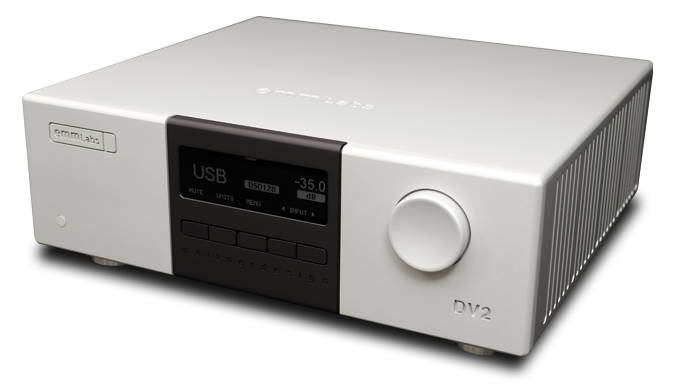
CD/SACD Player Shootout: EMM Labs XDS1 versus Esoteric K-01

Friday, November 18th, 2011 by Mike

In this corner, weighing in at about 200 lbs [well, that is what it FEELS like - leaning over to get this on a rack is no feat for the timid. Neli was able to do it, but not without a few remarks :-) ], but really at 68.4 lbs, the Esoteric K-01. And in the other corner, at 37.5 lbs, the EMM Labs XDS1.

We have been dealers for EMM Labs for about 7 years, if I remember correctly. We would like to be dealers for Esoteric someday, when we expand our operations, [in the not too terribly distant future we are fervently hoping!].

That said, the shootout did not reveal any serious surprises that a skeptical reading through the current voluminous content on the web does not already point out.

The system was for this shootout was:

Hansen Prince speakers
Lamm ML2.1 amps
ARC Ref 5 preamp
Nordost Odin speaker and interconnect
Elrod Statement Silver power cords on pre and amps
Bybee power distributor
Harmonic Resolution Systems SXR equipment rack, M3x platforms and Nimbus
Jorma Design Prime (single-ended) interconnect on the CD players
First Synergistic Hologram D then Nordost Odin power cords on the CD players


A photo of the Esoteric K-01 remote


A photo of the Esoteric K-01 remote


A photo of the EMM Labs XDS1 remote (we forgot to bring it to the shootout [it’s always something], so this is a photo from this morning)


Here are Neli and P. configuring the Esoteric K-01 to generate output on the single-ended outputs. We also tried both the 4X oversampling and DSD filters [I thought the DSD filter was more digital sounding, Neli and P. thought it had more resolution and liked it better]. Previous tests had shown little difference in performance between balanced (XLR) and single-ended (RCA) interconnects [irregardless of the ARC reportedly being a balanced architecture].


[The Fluke multimeter was used to bias the Lamm amps after their recent move to this location, with presumably a different wall voltage than the previous location across town].

That Odin interconnect is kind sticking out of the rack at an odd angle, isn’t it? :-) All I know is that *I* was out of the room at the time :-) .


The Esoteric K-01

Both the K-01 and XDS1 were put up on HRS Nimbus Couplers - significantly better than the sound with the standard feet.


The Esoteric K-01


The EMM Labs XDS1


The EMM Labs XDS1


The EMM Labs XDS1

We played mostly light Jazz, large scale classical, and the 1st cut off of Radiohead Amnesiac. All told we spent about 5 hours at this shootout.

We first did a round of shootout with the Synergistic power cord on the players, and then a round with the Nordost Odin power cord.

The Odin brought the performance of the 2 players MUCH closer together [bringing subtlety and imaging to the K-01 and more slam to the XDS1] but their differences were still quite evident.

Esoteric K-01
[Note that other power cords may do as well here in place of the Synergistic - not just the $$$ Odin, but just note that this player IS power cord sensitive, more so than the EMM Labs I think]

* More authority [in the end, I thought this the most compelling aspect of the sound of the K-01]

* More HiFi sounding [sounded more like a stereo than music - a lack of subtle information made each note stand alone as opposed to forming a whole. 95% of this went away with the Odin power cord. There was little or no imaging(!) either until we replaced the power cord]

* A little leaner [but not in such a way that detracted from the music, IMHO]

EMM Labs

* More like music [for many reasons, I think. Voices had more information in them, allowing us to hear emotion. Notes had more information, allowing us to string them together into songs. Much more listening to music as opposed to listening to how each note sounds]

* Softer, more laid back [The K-01 was more forcefully dynamic]

—————

This shootout really revealed the strengths of these 2 players: The XDS1 sounding like music in spite of being solid-state :-) , and the K-01 having great powerful midi- and macro-dynamics [and not just in the bass], in spite of being solid-state :-)

Strangely enough, these 2 players were closest on the track I played, the Radiohead. Notes are coming from all over the place anyway, so the K-01 did great, and the XDS1 really brings out the voice of the singer and his longing to be left alone. On this track the K-01 was more like a kid running around in a candy store, listening to this note, then that note…the XDS1 more holistic, more drug-like .

I also want to say that, contrary to what I have read elsewhere, the K-01 does NOT have more resolution - in fact it has less - the K-01 does emphasize the main body of each note more than the XDS1 however, and that might be interpreted as detail by some, but the overall information here is really is less because the subtle, more nuanced parts of the notes are quite a bit less prominent.

Wilson Alexandria X-2 speakers

Sunday, March 20th, 2011 by Mike

[Now for something a wee bit different]

Not sure whether I should post these observations or not. Usually when we experience a product that we do not carry, we learn a great deal about how it performs unsatisfactorily in several areas. Useful information, no doubt, but it has always been unclear how we might present the information in a non-partisan light. However, in this case, we gained a good deal of experience about a product that we do not carry that indicated that the product performed quite well and that the detailed information about how it performed might be presented here for the benefit of both Wilson Alexandria II owners as well as casual audiophile blog readers..

I guess it is just that we have such a fount of information about how the big Wilsons sound, on VERY high-end, VERY well setup gear [an unfortunately quite rare circumstance in the Wilson owner community], that it seemed a shame to not share it here. Because there is so much misinformation about this speaker line [understandable when the systems recommended by Wilson dealers by and large are just vehicles for making a quick buck, not for producing an enjoyable musical experience for their customers], I will try and go into some detail about what we have learned [hopefully, Neli will remind me of things that I may have forgotten already :-) ].

* Speaker Setup

Wilson apparently positions the speakers quite wide apart and significantly toed in, expecting the listener to sit by themselves in the sweet spot at the focus of the more or less equilateral triangle so created.

This may actually work for some people in some rooms, and it is nice and formulaic, not requiring the setup people from Wilson to do much time-consuming [and potentially panic-inducing] experimenting in front of the customer. But if you want your friends and significants to listen with you once in a while, or you want a more solid, real presence of musicians in the soundstage, or a deeper soundstage, etc. then this default setup is not going to serve you well.

Wilsons are front ported, which allows for greater mobility than rear ported speakers, and one just has to experiment a little with positioning until one is satisfied. One option is to toe them in so they point behind the sweet spot and position them close together, and then, slowly, move them apart until the presence [solidity] of the center images starts weakening. The speakers have optional casters, and at 700 lbs, this is somewhat easier than walking them on their spikes ;-)

Neli says: Let’s not encourage ANYONE to walk these things on their spikes [OK. I am a guy. I like to pick up heavy things. Really, I am not crazy enough to walk 700 lb speakers, but I do think she is talking to me here :-) ]. Caster->spike (even if you have to go Caster->spike->caster->spike a few times) is fairly straightforward, the tools supplied by Wilson are quite robust and well engineered. Unclear to me when crossover changes should be made, and what their actual effect may be — given the effects of the spiking and positioning exercise.

* Stereotypes

The stereotypical sound of Wilson is that they are bright with excessive bass. These observations are, evidently, by people who have heard Wilsons with amps that are bright and have excessive bass [and inferior cables and source equipment, there is no doubt]. I have some degree [large] of frustration [anger] at how bad these associated components are / must be and how audiophiles are duped into buying them and living with them(!) for year after year.

We tried several system configurations with the Alexandrias, the most revealing of which is the Emm Labs XDS1 player either directly into the Audio Note Ongaku integrated or through the Emm Labs PRE2 into the Edge NL Reference solid-state amps. The cabling was either 100% Nordost ODIN or a mix with Jorma Design PRIME speaker cables - all of which are, as far as we have heard in shootouts and at shows [a necessarily limited test] the most revealing cables available. All components were on a HRS MXR equipment rack, M3 or M3X platforms, and Nimbus couplers .

I.E. We *HEARD* these speakers.

This system has significantly more resolution and presence and separation and musicality than the Lamm ML3 / Alexandria X-2 room at CES 2011. Not because the Lamm ML3 is not highly resolving [oh boy, is it!] but because some of the associated equipment of that system at CES has the tendency to make the music soft and dull sounding [it just takes one problem component / cable / rack to seriously muck up the sound. One. And if there is more than one, well, there you go.]. We hope to setup a ML3-based system in the near future - for all the problems with the CES 2011 system it was very, very promising overall.

* Unspiked versus Spiked

We were surprised at the effect spiking the speakers had. We both expected that the bass and lower midrange would tighten and the lower bass would be more authoritative. Instead, the

1) bass tightened and diminished a little bit, merging much more into the whole of the music

2) the entire midrange rightened [ah, a misspelling that makes sense :-) ] and revealed noticeably more resolution. The sound flowed better. The notes were less round, but much less woolly as well. Enough resolution was added at the top end that the very, very occasional aggressive peaks now blended into the rest of the music.

* Overall character of the speakers

[using the $350K Marten Coltrane Supreme speakers as a reference standard for these $165K speakers]

Funny, but to me they sounded like were not as inert as 700 lbs of speaker might lead one to believe. This tends to lend a lack of ease to the music, and various notes / frequencies will pull to the speaker boxes. They are very slightly rolled off at the very top. They have good, high resolution but not excessive, down through the midrange. There is a definite resolution gap in the lower midrange to bass area [crossover area?]. And we did not play enough kinds of music with bass for me to say much about the bass resolution but I can say that the bass was not excessive and was decently controlled. Tonally they were ever so very slightly dark. Dynamically they were fairly well-balanced top to bottom and commensurate with other high-efficiency box speakers.

[I know, I know, I review things by pointing out their flaws…]

We did not play with adjusting the crossover nor tweeter cabinet angles, etc. [the latter is silly, we move around too much :-) ]

To me, what I get out of all this is that the top selling [last I heard] high-end audio speaker manufacturer is actually building decent speakers. One can NOT say that about the top amp manufacturers or top cable manufacturers. Of course, these ‘top’ manufacturers ARE dropping like flies….

This is seriously commendable - they could just make junk and still make a good living, especially in our marketing-driven hobby/world.

Although the observations in this post only concern the Alexandria X-2, one has to wonder how much of the rest of the line is also incorrectly stereotyped.

* A final word

At the Alexandria II price point there are a couple of worthy competitors - and there are reasons why someone might prefer the commensurately priced Marten or Kharma [or even somewhat more expensive (2011) Audio Note Sogon speakers].

In NO particular order….

One would prefer Marten Momento speakers if one [and I do] wants to hear DEEP, DEEP into the music, EVERYTHING in the music, every last nuance - every tiny dynamic fluctuation, every last harmonic taste, everything that makes music music.

One would prefer Kharma Grande Exquisite Midi speakers if one [and I do (I am so screwed)] want to hear a very detailed, VERY musical, very enthusiastic presentation of their music

One would prefer Audio Note Sogon speakers if one [and I really, really do] want a big, dynamic, engrossing, involving, who-cares-about-anything-but-the-music drug-like-at-the-press-of-a-button presentation.

One would prefer the Wilson Alexandria II speakers if one wants a reasonable, all-round performer with excellent brand recognition and which has many large dealers in most cities in the U.S.

There are not many other large scale speakers out there that have the ability to perform at a high level. The Acapella Triolons. Perhaps the big Focals [Grand Utopia EM, which I have only heard with inferior equipment, which generated an inferior sound]. Most of the players I can think of in this market have just built an expensive speaker to get a [miniscule!] share of this [minuscule!] market. Or the speakers are [essentially] too difficult to drive with existing top-notch amplifier technology.

The point here is that, contrary to public opinion in the audiophile community at large, the Alexandria X-2 do not suck like much, much of the rest of the junk out there that we have to deal with, junk that creates legions of audiophiles who need a multi-step recovery program just to make it back into the world of enjoying the playing of music again.

So, yes, you can indeed avoid expensive audiophile therapy sessions if you have these speakers … just put some decent equipment on them.

Follow us on High End Audio Mattters

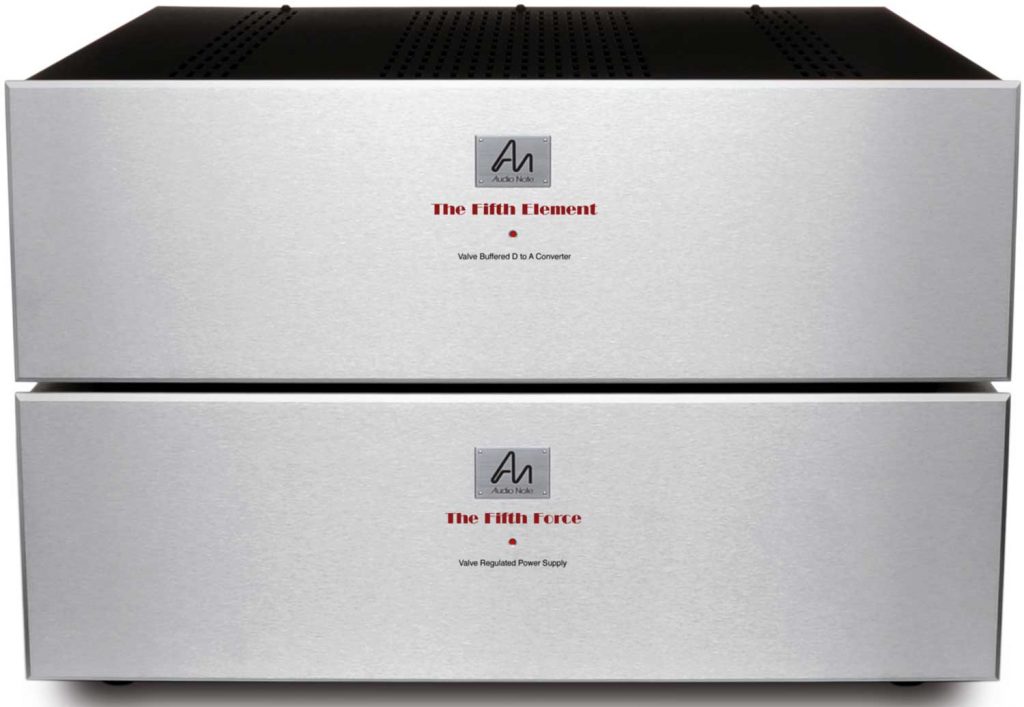
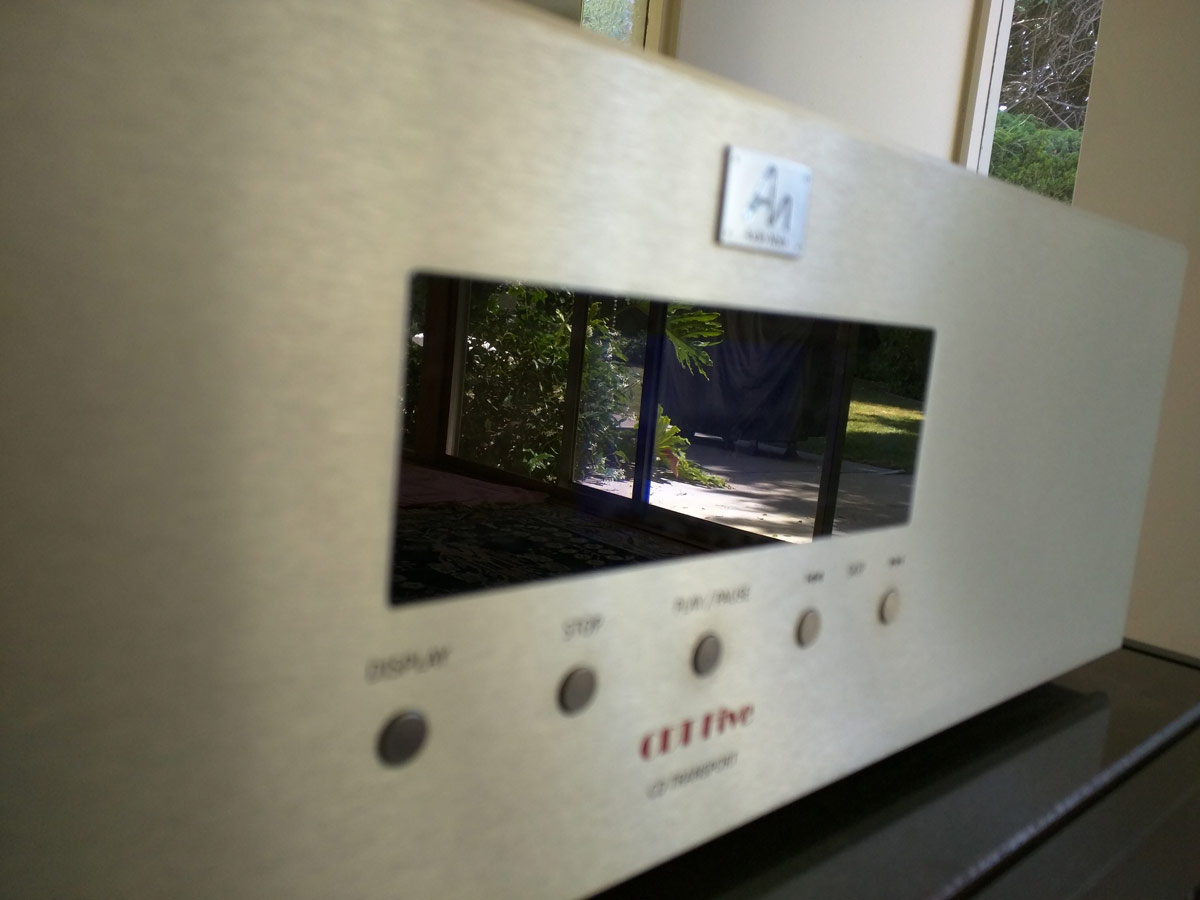
Audio Note CDT-5 transport and Fifth Element DAC observations

Sunday, March 13th, 2011 by Mike

This $185K (2011 pricing), 3-box (CDT-Five Transport, Fifth Element DAC and its Fifth Force power supply) digital front end is somewhat difficult to describe and put into context except to say that it is so clearly better in so many. many ways than what has been previously available - it is hard to imagine even those audiophiles with preferences out there on the very fringe not easily, EASILY preferring this player over other players and most turntables.

But, OK. Some details…

It is expensive. OK. Got that out of the way. :-)

It is also unquestionably significantly better than other playback, and by so a large a margin, that it is easy for one to fall into this “Why would I ever want to play anything else?” attitude and just stop thinking about what it is doing. You stop thinking in terms of “Oh, I wish we had an LP version of this CD” and start focusing on the music [and finding out where it has hidden itself in your collection if your collection is as unorganized as ours is :-) ]

This playback is better in all the areas, if we are going to slice and dice it, that audiophiles might feel are important: if you are a detail head, this playback has so much more resolution that it restores your faith in science [more on this later]. If you are a harmonics-head, … oh boy. If you are a sound-stage head, or imaging-head, or dynamics head [later, later]… everybody who focuses on their must-have attributes - they will be ecstatic because they are all there to the max, glorious in all their splendiferousness.

[later] This may be hard to explain to people who are not familiar with what LPs do so well compared to CDs… but let’s try. CDs are supposed to have a larger dynamic range than LPs, but this seemed true only when one compared the softest possible note that these media can manage with their loudest possible note. But with ordinary notes, CDs have always sounded compressed. Dull. Not as lively as an LP. I have always thought ‘more dynamic range’ was essentially marketing BS. But… with the CDT-5/Fifth Element, the difference in dynamics between CD and good LP playback is so small, I do not know now which has more dynamics [it is close enough, I am not sure I care all that much to see which ‘wins by a nose’ here].


(the Fifth Element DAC. The metal appears slightly red because the nearby sunlight is reflecting off our bright red leather couch)

Let’s compare this stack to the Emm Labs XDS1. No we are not eating our young here, we love love love the XDS1, but I think it might help to compare the Audio Note to this very different sounding player that we have so much respect for here at Audio Federation. Although the XDS1 is only $25K (i.e. one EIGHTH the price) it is significantly better than all other solid-state players no matter their price and no matter your sonic preferences [Of course, the same can be said for their little $11,500 CDSA player as well, but let’s not go there…].

It might be instructive to revisit the ways in which the XDS1 excels as a CD/SACD player. First, it has an amazing ability to render the various threads in a musical score without jumbling them all up - not just great separation of notes, but of separation of sequences of notes, various harmonics and of the instruments themselves.

Second it has an extremely black black background. When a note decays you can hear it… hear it… still hearing it… until it ends or the recording engineer turns the volume down to zero. This also allow us to hear very very fine subtle notes and note characteristics. This might be considered another side to ‘high resolution’ - allowing us to actually hear the resolution that is there as opposed to artificially shining a light on the note attacks in various regions of the midrange as is so common amongst the competition.

Finally [skipping to the end here…] the XDS1 just sounds less digital and more like music. I always find this amazing, when comparing this player in shootouts. The other players do not ’sound digital’ until one hears the XDS1… and then it is “OMG, how did I not hear this problem before?”

OK.

Back to Audio Note’s Fifth Element DAC and CDT-5 Transport.

This is a tube-based solution and therefore you might think it has its natural advantages and disadvantages.

BZZZZZZZZZZzzzzzzzzzt! Wrong.

Well. You are right but…

…just not as right as you think you are ;-)

The Audio Note digital source really excels in the areas where solid-state usually reigns supreme [love that word], it has higher resolution, better separation and Alllllmost as black a background in our shootouts [and, uh, maybe even a blacker background than the XDS1 - note-to-self we really have to move around some power cords to make this a little more fair].

In other areas it has [very very close!] the midi-dynamics of a good LP playback, it has a tonal truth that I have not heard ANYWHERE else [enough to make you cry when you realize just how poor our usual playback harmonics have been in this regard for the last 100 years]…. You can just add lots of etc.s here - but these are just some of the characteristics, the punching-me-in-the-face differences, of this digital solution compared with all others.

So…

It is 8 times as expensive as the XDS1… and 99% of all other players [many of which really, really suck - why do people buy this stuff? ]…

Is it 8 times as good?

It is this question, me trying to figure out what “8 times as good” means, that has taken me all these many weeks to understand [I could have written the above review in the first 10 minutes or so of hearing the Fifth Element/CDT-5].

One could approach this in this manner: The Fifth Element/CDT-5 is to the XDS1 as the XDS1 is to the…. well, I am not all that familiar with $3125 CD players. One could look at a used Audio Aero Capitole [$4K? a steal] or used Emm Labs CDSA [$5500K how do other solid-state CD player manufacturers stay in business…] or …

So, yeah. 8 times better.

One could also approach this as in “Where is the best place for me to spend $200K in my system?”

:-)

Well, it depends on your system and budget… and really, if you play CDs and want your CDs to sound their best and you just want to KNOW they sound their best and you don’t want to waste your life not listening to the best [which pretty much DOES describe myself, when I have the funds… (oh, and Neli? *sheesh*, she is more gung ho than me half the time)]


(the CD is IsoMike’s release of the Fry Street Quartet playing Haydn)

For the first time since Audio Federation started I started bringing out old OLD CDs. Old Cocteau Twins. Old Patrick O’Hearn, Old Pink Floyd live concert bootlegs [you never seen 3 people more hypnotized by the music - ever have a hard time blinking? - as we listened to an old version of Echos. Magic? Drug-like? How about Warp Drive-like]. Old Jefferson Airplane…

Let’s use Surrealistic Pillow as an example. A gold CD from 1985 or so. Sounds horrible. Seriously, seriously mucked up, man. Especially the complicated electric guitar sections - bright, confused, over-saturated, noisy, you name it. On the CDT-5/Fifth Element you could hear exactly how bad it is - but it wasn’t painful and there wasn’t any problem with listening to the whole CD. This digital playback is really good at stitching together the stuff it finds on CDs and making notes and stringing them together into music. This makes it sound nothing like a ‘digital sound’ with good CDs and makes bad CDs also not sound like digital, but instead like just good, but very badly recorded, music.

Typically, bad CDs are very painful to listen to because their badness, often very aggressive digital-sounding notes, is too hard for most players to handle - and those that can handle it, it is because they just dull and smooth the notes down to round blobs… which of course they also do to all kinds of music played, good or bad. But the CDT-5/Fifth Element does not sacrifice resolution or detail - instead one might say it is the over abundance of resolution, and perhaps especially harmonic resolution, that allows us to have our cake and eat it too i..e very well recorded music has all the detail you will ever be able to hear and bad music is actually listenable and to some extent enjoyable [limited in this case by our knowledge that we should be able to find a better recording of this if we could just get our lazy butts off of the couch :-) ]

OK. Kind of a longish review. I won’t bore people with the “equipment has to go back, hate to see it leave, wish we could afford it” end-of-review cliche.

Instead, I will mention a way we use to make us psychologically come to terms with this eventually having to go back to the continent [it is AN’s show digital]. We could just not play music for a couple of weeks - and let the memory dim. We could throw a tantrum and stomp our feet [Oh, I so much want to do THIS!]. We could close Audio Federation, sell a lot of demo stuff off the floor, and just order them up.

But, another perspective is… we now know what the best digital is. No question. And there is nobody else really trying to make the best digital [though they are good at making the most EXPENSIVE this or that out there, and, with the press, the most hyped]. So we put it on The List, we look at the budget, and when we can afford it we will get it back. The hardest part - the analysis and getting to the actual buying decision, is done. And meanwhile we can enjoy other digital, hearing some issues they may have but that is OK. The CDT-5 transport, Fifth Element DAC and Fifth Force power supply are on our (capital ‘L’) List, don’t you know?…

i.e. …They’ll Be Back.

[thanks Jim, I think I stole this perspective from you(?)]

Audio Aero LaSource CD/SACD Player w/ linestage: Part 1

Sunday, October 24th, 2010 by Mike

[We’ll get back to RMAF 2010 in a bit.

We only have this player here for a limited time, and we are so very curious about this, their new flagship player, that we just HAD to take it to the Audio Federation gym [listening room] and make it do a few bench presses [play some Redbook CDs], and few chin-ups [SACD CDs] , squats [run it directly into some solid-state amps], … [the workout metaphor is running out of steam here…] and see what it can do. Part 1 will have mostly photos, Part 2 will detail the sound and the shootout we had last night]

The LaSource is Audio Aero’s new CD/SACD player with a built in tube linestage. It lists for $44K. It uses the 2nd best Esoteric transport made. Front to back, top to bottom, Audio Aero has shown that it is not messing around with this player: fit and finish is impeccable. [There is also some great news for current Audio Aero Prestige owners forth-coming]


The player comes in a very large, very heavy [70-80lb] standard cardboard box. Inside is a nuclear war-proof suitcase.


The top and side bracing between the suitcase and the inside of the cardboard box.


The rope and handles are used to lift the suitcase up out of the card board box. It is a tight fit and the suitcase, with the player inside, is heavy.


The player is packed very securely and snugly in the suitcase. The two slots on each side there are very convenient to get the player up and out of the suitcase.


The player has been gotten up and out of the suitcase. :-)


Neli is putting the things back in the suitcase because, although this is indeed more fun than a pile of Birthdays, she has to wait until Mike photographs everything before she opens all of the toys.


Oh, look Neli, the case has cool stuff in the bottom in little cutaways.


Closeup of the cool stuff in the bottom: remote control, gloves, manual, the d’rigor non-audiophile approved power cord. [Neli turned the remote control over so that you all can see it].


The back panel [we’ll have better photographs soon]


The LaSource on the top left of the HRS rack.


The LaSource as most people will see it day-to-day


Underneath the LaSource player. It comes with stock feet that look unfamiliar [instead of the Black Diamond Racing cones that the other players come with], but upon further investigation are not.

Uh. Do not use these unless you like all the voices on the music you play to sound a little like Prospector Pete on Bugs Bunny cartoons and for there to be a lot of fuzz between each note. Here we see HRS Nimbus Couplers holding up the player and the stock feet levitated. More in part 2]


The buttons on the left side of the player


The buttons on the right side of the player


From above.


From below.


From behind

A Hybrid Review Approach…

Monday, November 9th, 2009 by Mike

… mixing the subjective and objective…

Essentially it uses a subjective analysis of objective aspects of the sound of a component.

Even more essentially, the listener gives it the old ‘college try’ and guestimates how good a component is in several pre-determined and STANDARDIZED categories.

See, if the categories are well-chosen and are standardized, and a number from 1 to 10, say, is assigned, then components can be compared.

Anyway, in the most recent Spintricity article:

Towards a Hybrid Subjective Objective Review Process

… we attempt to come up with some categories that we, at least, use here [tho in the past we have not been so disciplined as to assign a number to score a component’s performance in each category]

The idea is to create a list that we can print out and then enter or circle a number of something so that the review process can be raised up out of the muck and mire.

Saturday Interconnect Shootout…

Monday, July 27th, 2009 by Mike

… though maybe not exactly a shootout as perhaps more a tasters test.


We performed the test on the downstairs system - the distance between the EMMlabs DCC2 DAC/preamp and the Audio Note Kegon amps was close enough [barely] for the 1 meter cables to reach.

We heard the TEO Audio MHD-1 “Standard” Liquid Cable interconnects, the Stealth INDRA with the newer connectors, the Audio Note U.K. PALLAS, Nordost VALHALLA and Jorma Design PRIME. Before this whole thing started we had the Nordost ODIN cables on the system for a few weeks.

There were all RCA cables. The TEO, PALLAS and PRIME were warm - the VALHALLA and INDRA hadn’t been used for a month or so.


We just leave the cables in place, and it looks so cool to see them all lying there. Kind of like having multiple tonearms, you can just “turn off, un hook, hook up, and turn on” to switch to a different sound entirely.

A long report will be forthcoming, I think, and the TEO and PALLAS writeups will be in the magazine.


The TEO speaker cable

The short and sweet is that the TEO is indeed liquid sounding - very much reminding me of an MBL sound or a clear-sounding CARDAS. The sound is round, and more forward/room pressurizing than the other cables in its price range. This is a sound that ‘comes to you’ rather than you having to ‘go to it’ - i.e. it doesn’t require your brain to work as hard as other cables in this broad price category do - not the last word in transparency, soundstaging and inner detail [which are all closely related], but you can just sit back and enjoy the music. Personally, I like them.

There are a lot of people we know who insist on this kind of sound - many are good friends who happen to be Canadians. Interestingly TEO is also manufactured in Canada [not to suggest there is a Canadian ’sound’ but… well, is there one? And is this it?].


Another TEO interconnect (the PDL)

Oh, prices: $2500 for the TEO, about $4K for the VALHALLA and PALLAS, about $6K for the INDRA and about $10K for the PRIME all for 1 meter RCA interconnects.

The PALLAS, although considered a small signal cable for the backs of turntables and digital transports, performed perfectly in this large signal position between the preamp and amp. Sounded just like itself.

The PALLAS has one of the most evenly distributed soundstages and with an uncanny ability to keep separate and distinct the disparate threads of the music. The timbre and frequency response is very, very even up and down the range.

It does not have quite the blackness of background nor the uber resolution of the PRIME [not to mention the ODIN] but this is one of my favorite cables and I put it at a close 3rd place behind the other two. If you look at the relative price of this cable - you will know why we are so EMPHATIC about people taking a closer look.

Emm Labs CDSA + Nordost ODIN versus Emm Labs TSD1 and DAC2

Saturday, November 15th, 2008 by Mike

The question: Does an ODIN power cord on the back of a CDSA make it the equal of Emm Lab’s new ‘black badge’ TSD1 transport and DAC2 pair?

[Thanks Steve G. for the idea for this shootout.]

Starting off with a question like that makes me think of Carrie in ‘Sex and the City’ writing her column [just got done watching the movie. Liked it but it should have been called Spoiled Women and Wimpy Men in the City. Am I right or am I right? :-) ].

The question is especially relevant because the price of an ODIN + CDSA combo is about equal to the price of the TSD1/DAC2.

We decided to do a slightly different shootout, perhaps unfortunately, that compares the CDSA + ODIN against the TSD1/DAC2 using fairly decent power cords [Valhalla and ELROD]. At the time this seemed to make more sense - most people would put a decent PC on the ‘Black Badge’ pair [the ‘Silver Badge’ pair being the CDSD/DCC2]. And the Kimber PC that comes with the Emm Labs gear had not been broken in at all - otherwise we should have used that power cord.

Anyway, we learned a lot from the shootout - or at least confirmed what out other - very lengthy shootouts [appearing soon in the Magazine] told us about the two players.

For this shootout, we were able to just switch back and forth between the two players. They were both run into the Audio Note Ongaku integrated using Nordost ODIN interconnects. The Ongaku was connected to the Marten ‘Coltrane’ loudspeakers using ODIN speaker cable. Every thing was sitting on Acoustic Dream’s amp stands.

Since we were eagerly anticipating the luxury of being able to switch back and forth between the two players in real time [usually we have to do a lot of disconnecting and connecting between listening to one component and other - trying to do it as fast as possible to keep as much aural information in short term memory as possible], we needed to find discs that we had two of. We did and they were: red book Radiohead’s Amnesiac, SACD Santanna’s Abraxus, and SACD Janis’ Rachmaninoff.

Radiohead:

The CDSA sounded a little ‘dirtier’, with a little more ’spit’. Perhaps a little more romantic - but we later decided that the reduced separation here was more familiar, more comfortable, and more accessible. We talked about this before - how as a system gets better and we leave the old familiar problems behind - we miss them. Many people think those problems are part and parcel of the way music is supposed to sound and they [and their poor roommates] get stuck in a sonic rut, a backwater, a musical ‘hell on earth’ [but I probably exaggerate a little].

The Pair had way more separation, a much deeper [spooky] blacker background, and better purity. By purity here I mean that the notes were not more harmonically pure - they are about the same on both players - but that the black background and separation allowed notes to be heard, that they were allowed to live out there lives the way they were meant to, that - well that is what I am calling purity until I can think of a better name [I would say ‘clean’ but that is taken by people describing the lack of note attack aggressiveness. Maybe ’spotlessness’?? Integrity??].

Anyway, I hope people can begin to see that these 3 things: separation, an incredibly black background, and purity/cleanliness/spotlessness/integrity are all related and are a major factor in the difference between the two players on this particular system. [Previously, the Pair also seemed more linear, more well-balanced, than the CDSA but the ODIN PC helped out a lot on this. It also increased resolution, separation and the ‘romantic/engaging’ aspect of the CDSA as well].

Neli: CDSA fuzzier, not quite as crystalline.

Abraxus:

The Pair: The ability for greater separation between the notes helps out a lot here. The first track is actually quite complicated - and the pair was able to separate out separate strains of the music much better than the CDSA. [there was a feeling of… wow, I didn’t even know that those were separate instruments before…]

The CDSA: Again, somewhat more accessible, but in comparison with the Pair, it sounded like things were mixed up, much more the familiar amorphous mass of cool sounds we usually hear when we listen to Abraxus.

Rachmaninoff:

The Pair: the spatial connectedness is better. The rhythm is much more life like.

The CDSA: A little harsher.

PRaT and Presence/Solidity were ….different between the two.

—————-

OK. It is time fasten seatbelts and leave the standard digital player shootout and discuss just what I think this Pair does to the digital playback universe.

First, I think that finally, digital, THIS digital pair, is now perhaps the equal of analog playback. Before you all click the back button on your browser, let me say what I mean by that.

First, it is OK, for me, that digital be *different* than analog. Why make it sound like analog, we already got analog and it does quite fine, thank you.

Second, what are the ways that analog is better than digital? Separation, midi-dynamics, and sense of rhythm [not PRaT]. It also has a harmonic distortion that many of us enjoy.

OK, in what ways does the TSD1/DAC2 pair excel? Separation. Black background [revealing the midi-dynamics in a way much like analog]. And a sense of rhythm that is not like PRaT.

So, let us talk about PRaT - which in general we can describe as a strong emphasis on the main beat of the song - resulting in an urge to perhaps do some toe-tapping. The idea here is that perhaps it is the lack of separation, causing things to collapse, both spatially and timewise, so that too many things happen at once, and too many things in one amorphous image, causing:

1. an abnormal emphasis on the main beat, and deemphasizing the natural delays between the actual notes and the interplay amongst musicians as they play off one another and which, in reality, are not exactly 100% on the beat each and every beat.

2. an abnormal collapse of the spacial image, in the soundstage, into a solid mass, that makes it seem like there is a solidity and presence there that doesn’t really exist. That in reality there is actually a guitar body, and a guitar neck, and a voice,and the voice reflecting from the microphone…. which makes ‘presence’ and ’solidity’ more real, and more 3D. And less of a ‘lump’.

So rhythm should be what it should be: and notes should happen on the beat when they were recorded that way, and a little before or after if they were recorded that way. When the notes are smeared the least little bit - it is perhaps made up for in the mind of the listener by assigning them to the nearest ‘beat’. But when they are clearly off of the beat, they are interpreted as the natural interplay between musicians, the natural human failing of not being perfectly on time [and this is a good thing - it is how things sound like, live].

So what the pair did, on this system [and make no mistake, this is a *system*. We’ve done so many, many shootouts here lately, everything contributes: the speakers, the ODIN - the decay of the notes are unbelievably beautiful, on both players - and the Ongaku is not chopped meat either :-) ], was to allow us to experience, to enjoy, the music in more ways than we have before using digital playback.

A lot of people [who have lived with audio for awhile and graduated from the impressive], say they want a richer warmer sound. That they want more PRaT. That their system is not involving enough and that adding warmth and toe-tapping PRaT is the way to fix that.

Well, that would certainly help. For awhile.

But what people really want, deep down, beyond this or that tweak or enhancement - if I can be so bold as to say it in print - is to have a convenient playback that evokes the real - that allows them to hear the wonderful interplay amongst the singers and musicians, to hear the beautiful tones and decay and care that went into every single darn note in every single darn piece of music in their music library.

Neli thinks the TSD1/DAC2 Pair is evolutionary. I think it is revolutionary. But maybe she is right. The way way black background [not like stupid power conditioners that strip away detail at the same time], and the ability to keep the different notes from collapsing into each other - is probably just evolutionary.

But there is a tipping point to things. And I think this is one of those ‘tipping point things’. [Boy, and I thought this was going to be a short post].

In this idea, suggesting that the Pair is like analog - different but equal - is the idea that it must be the depth and variety of the ways we can enjoy the two mediums that we need to compare and contrast. It is my sense that the Pair adds more ways to enjoy music - that some of these ways are similar to analog - and unlike the digital of the past - as described above, but that they get there a different way [lower noise floor versus greater dynamic response to notes at ordinary loudnesses, etc.].

More later on all that…


Neli with the Audio Note, Kharma and Acoustic Zen speakers in background, and Jorma Design PRIME interconnects on floor at left.

So, :-) we went upstairs and played the same Rachmaninoff music, but on LP on the Brinkmann turntable, Audio Note M9 Phono preamplifier, Kegon Balanced amps and Coltrane Supremes. With the low-gain Lyra cartridge and a problem with noise on the line getting into the sound - it wasn’t an optimal setup by any means.

OK, OK…. But when the massed strings played over on the left, on both systems I enjoyed them, and in similar ways. I could pick out this or that guy a little louder than the others or a little too long with the note… [in some ways, it is the ability to hear the mistakes in the music that make it seem much more real :-) ]. I got the same feeling of ‘wow’ that the music was trying to invoke in the audience.

I got the same feeling at being present at a concert - the conscious and subconscious cues each medium was giving me that this was REAL were different but equal.

More about THAT later too. This is all just supposition - that the TSD1/DAC2 pair can offer as convincing an experience as analog - it seems like this is something that will come to pass someday - and it seems like that is today, to me, now - but it will take a long time to verify.

Personally, we do not differentiate here between SACD and red book CDs on the Emm Labs gear. The differences between them has more to do with the recording and mastering than the medium. But lately, and maybe it is just me being lazy [and heaven knows I would love to be less of a perfectionist, it would certainly reduce our high-end audio expenses - Oh, wait, Neli would have to get lazy too] - I did not feel I had to care if we were playing CDs on the TSD1/DAC2 pair and LPs at RMAF, and that has been true here as well. Sure they are different. But all the dimensions in which I enjoy LPs I now can enjoy CDs. This was not the case with previous digital gear.

————–

So, do we still like the CDSA? :-) We had to send our TSD1/DAC2 pair back - it was just loaned to us for the RMAF show - we had previous commitments and were not able to buy this demo pair :-( . Big unhappy frown for Neli. Big unhappy frown for me, too, but I am an optimist - or maybe just a masochist :-) - we’ll have our own soon. And then we can think about what it will sound like putting a pair of ODIN powercords on the TSD1/DAC2 instead of the CDSA….

YES we still like the CDSA - it does almost everything as well as the Pair, and we still have the ’silver badge’ Pair, too. But………………….. stay tuned :-)

Playback Designs MPS-5 versus the EMMLabs CDSA SE

Saturday, August 23rd, 2008 by Mike

This was a rather hurried back and forth shootout that lasted about an hour to an hour and a half. Neli and I were somewhat at an advantage, because we are very familiar with the system - and a very high-resolution system at that.

The system consisted of the Marten ‘Coltrane Supreme’ loudspeakers, Lamm ML2.1 amps, and Lamm L2 linestage. Cables were a mix of Nordost ODIN, Valhalla and Jorma Design PRIME. Powercords were Elrod and AcroLink. All components were on HRS platforms (and the front end on the HRS SXR equipment rack) except the Marten speaker crossover [Hmmm… we got to get this boy a M3 too].


[More photos of the PD in the previous post]

The Playback Designs MPS-5 (PD) only had about 300-400 hours on it so far, so we assumed that it was enough like the CDSA that its break-in process would be go through likewise phases of dynamic compression before opening up at around 700 to 1000 hours.

In some large sense the fact that the PD is still breaking in invalidates some of what we heard. But, considering how many of the reviews out there are of unbroken-in equipment - we thought we’d at least publish a few impressions to add a little sanity to the mix.

The short and sweet is that the PD is a very good player but I don’t think it beats the CDSA SE with the latest transport and software updates.

That doesn’t mean EMMLabs can rest easy - this player has a lot going for it - and it is similar enough to the CDSA [at this point] that it will cause confusion in the marketplace [though at $15K versus the CDSA’s 11.5K, there is a price difference - though the PD does offer additional functionality for the higher price tag by providing digital inputs on the back of the unit).

OK. Details…

The PD had very good PRaT which I thought was slightly better than the CDSA.

The PD had a slightly more colorful tone - which is not to say warm, tho it might be thought of that way - but more like the Kharma kind of exuberance - or that of analog. The Meitner is also known for its pureness of tone - and the PD was like that, only tipped up a little. I did not find it to be out of proportion to reality, necessarily, but it was a definite difference from way the CDSA was interpreting the CD.

Another difference was that either the soft notes were made more prominent - or the midrange and highs were made more prominent - which I think resulted in several more sonic differences [according to my mental model of what is happening]:

1. The soundstage was more forward. This was neither more or less pleasant than the CDSA - it just WAS.

2. There was more ‘perceived’ resolution - a lot of the subtleties of the music were more evident [note that this differs from Dave’s interpretation - by I think I have an explanation for this further on]

3. There was a higher noise floor

4. Because lots of very soft sounds were now more in evidence there wasn’t a clear demarcation between images in the soundstage.

5. This lead to a feeling that there was a larger presence, more of a oneness or wholeness to the stage - perhaps even more ‘continuousness’ where notes flowed well into each other.

All this elevation of low-level detail also to a feeling that there was [is? have to remember - this player isn’t broken in yet, and although the CDSA doesn’t sound like this when it is breaking in - this is not the CDSA] an innate lack of dynamic range between the quietest note and the loudest - and that there was ‘fuzz’ between the musicians. I felt that there were too many ‘cues’ [very low level subtle sounds like the sound bouncing off the guitar] telling the ear where everything was and concluded that there was some information that really shouldn’t be there - that things were moving around too much and too large - and that it also tended to make the notes rounder - even though the notes were great there were just a lot of other sounds around the note that was filling in around it - perhaps making it *seem* rounder.

So, in conclusion, this is a very nice player but CDSA SE owners do not have anything to worry about, …yet. However, if they look in the ’solid-state players less than $50K rear view mirror’, they will see a new player has appeared out of nowhere where before there was none in sight.

Emm Labs is a company with equipment in most pro studios in the world. This is Playback Design’s first product.

I am hoping that Playback Designs and EMM Labs continue to diverge with respect to the sound of their equipment - both to reduce the potential of litigation [the head engineer at PD is from EMM Labs] and to offer the audiophile more choices.

Our heartfelt thanks go to Dave for lugging his player up all those stairs :-)

—-

[Whew! Hard review to write, trying to be fair to both players and to both manufacturers who we like and respect - and one of which, Emm Labs, we represent in the marketplace. Also, people get so passionate about their latest high-end audio toy - one of the reasons magazines only publish positive, non-comparative reviews is just to avoid the poop storms :-) ].

Digital Cable Shootout

Monday, February 18th, 2008 by Mike

A digital cable shootout without any digital cables… but we won’t let THAT stop us…


The room showing the listening couch (I sat in the sweet spot behind the couch on a chair that puts my ears on a good level].

Neli, Kevin (thanks! Kevin) and I shot out 7 (SEVEN!) cables last night in a marathon listening session.

The cables were each substituted, some of them twice, between the Audio Note CDT Three transport and DAC 4.1x Balanced. The signal then ran through a Valhalla interconnect into a Lamm L2 Reference line stage. From there through 10 meters of Valhalla to the Marten Coltrane Supreme loudspeaker’s crossover box. Then through Nordost ODIN into the Lamm ML2.1 amps. Finally, that nice old signal completed its mission through Jorma Design PRIME speaker cables.

We played, over and over again till we was about to die, three cuts: Mark Knophler’s Sailing to Philadelphia track #2, Rachmaninoff track #6, and Radiohead Amnesiac track #2. Neli and I know these cuts REAL well, and Kevin knew one of them [and now all of them :-) ] really well, so these particular cuts helped us focus more on learning about how the songs sounded versus on learning the songs themselves. We played CD 1, then 2, 3, 2, 1, 2, 3, 2, 1 in this pattern so that we would here some of the tracks back to back on different cables.


The PALLAS is still on the system this morning.

Neli did all the cable swapping, about 10 swaps in all. It took about 6+ hours. They went and got Vietnamese take out at about 2/3 of the way through. Yes, there WERE complaints about chewing sounds getting in the way of the listening. For my part, I just could not IMAGINE what Neli was chewing that would make such a noise. But, to rapidly continue on…. ;-)

The cables finished the shootout in this order. Note the 3-way tie *(which we can help break for you based on your individual preferences, perhaps) and how the SOOTTO seemed to do better as a low-signal turntable cable compared to this one (that may be because this system, the Coltrane Supremes specifically, really likes to show off top-to-bottom detail and clarity - the SOOTTO being more about solidity and dynamics and color. As mentioned below, after some thought, it is perhaps the Kharmas love of dynamics that boosted the SOOTTO into a tie for first in that system]:

[[[Nordost Odin, Jorma Design PRIME, Audio Note PALLAS]]], Audio Note SOOTTO, Nordost Valhalla, Stealth INDRA, Audio Note SOGON.

Hopefully I will add some photos here… but… oh, I am!

*** Nordost ODIN. ***

Both the Odin and the PALLAS were doing things that we all found a little hard to get our ears around. I think that is both because they are relatively new here and that they are both breaking new ground in terms of what they can do.

The Odin was the clearly the overall audiophile performance winner. Front to back depth and separation was so good it took some time to get used to. The clarity was other worldly. The even-handedness up and down the frequency spectrum. The precise imaging. Precise harmonics. This is the only ‘competent’ interconnect, just like the Coltrane Supremes are the only competent loudspeaker - they just do the things they should be doing - nothing less, nothing more.

So why the 3-way tie then?

Was it just because we were tired of getting dry-mouth, forgetting to close them during all the ooohs and ahhhhs as we listened to the ODIN?

Yes.

But it was also because we really liked the intense color and apparent humanity of the human voice when using the PRIME (Kevin called it ‘Vivid’), and the ‘rightness’ and cohesiveness of the PALLAS.

We are very familiar with the PRIME, and the sound was therefore more accessible to all of us - it sounded like our system was sounding REALLY EXCELLENT with these cables. With the PALLAS it was like being there (especially the Rachmaninoff) and communicated much more of what I thought the musicians were trying to communicate - their interplay, the threads of melody, the stage - much more like REALLY being there than I have ever heard.

The Odin was more like… WTF! So THIS is what this recording sounds like. Seems like we need to reposition the speakers because we are getting some soundstage fuzziness… there… and THERE! [True.We do. The bass towers between the main towers is just not working out so well where we have them. We either need to to move the bass towers back or to the outside of the main towers].

We would be happy with any three of these cables. They all sounded excellent. The 10th time we played each song was as entrancing as the first - even though my brain was melting and it was hard to analyze what I was hearing at the very end anynore [but the last few songs were just a confirmation pass - yes we DID hear what we heard during the first pass, and yes, it is still quite nice thank you].

The Odin would, however, push us to optimize the rest of the system a little sooner - it being such a good window on what is actually on the source media. Just like the Supremes have forced us to continually improve our system. These definitely are pushing the audiophile envelope - raising the bar of what CAN be done with a high-end audio system.

*** The Jorma Design PRIME ***

Neli says there is chocolate on the Prime, and then she looks at ME(!) Now I ask the world, who is the chocolate addict in our house? No it is not me :-) [But I guess I do eat protein bars that have a chocolate coating… Oh no! Banished to the audiophile penalty box!]

This will be the hardest to write, I think, because we are SO familiar with the sound - I will have a tendency to skip over some of its attributes. On the other hand, Kevin was there, and he brought up things about this sound that was a reminder to me… Oh yeah, they DO do that don’t they.

That said, each time these cables were put on was a joy. We have NOT grown tired of what they do. In fact, it was still a WOW experience.

First off, the voices. The voices on Radiohead, for example - but the Knopler too, were clearly better than the voices with any other cable. The HUMANITY of the voice stood out. This sounds like a real person! Somehow the balance of the frequencies and resolution just works. The throat and chest and gutturalness was just perfect.

There was also a lot of color to the harmonics. Not overly much - in fact just the amount that I want to hear. For example: A lot of notes in music are just plain ‘fun notes’. If you had a button and it made this sound when you pushed it - you’d be sitting there all day pushing it over and over and over because it sounded so cool. Knopler ’s guitar, a lot of the sounds [but not all :-) ] on Radiohead, some of the violins on Rachmaninoff. Just like a kid we would be. Pushing that button over and over. But a lot of our systems leave out the ‘fun stuff’ in notes. This cable emphasizes the fun stuff.

This cable also had excellent separation, side-to-side and front-to-back. details were sufficiently plentiful that it kept us engaged as we continued to find new ones - new depth and characteristics of the performance - after the 10th [1000th] time we heard the track, etc. etc. [See, I TOLD you this is hard to write down everything we know].

Not as delicate sounding, not as much finesse, as the other two top contenders [something we thought we’d never hear ourselves say about the PRIME, which has details out the wazoo compared to most anything else on this planet here].

This was the most exuberant cable of the top three. Happy Happy. Enchanting. The PALLAS was joyous and romantic. The Odin was kind of like all emotions mixed together , being VERY emotional and engaging - but nothing stood out.

This cable is probably best, out of the ones we tested here - for people who love those audiophile-like performance characteristics, who want their system to sound really, really good - but don’t want to, or aren’t ready to, push the envelope and re-evaluate what they know about system setup and configuration and just what can… be… done… with the ODIN. [The ODIN *WILL* show you what your system sounds like - not in a harsh way, unless you have a bright system and are upgrading from something like CARDAS - but in a Oh! That is the contribution of my amp! Oh! That is my CD player. Hmmm… needs some vibration control to tighten THAT up a little bit. OK let’s do that. Oooooooooh. That sounds awesome. OK, sounds like the speakers need to be moved a wee bit to starboard… Yeah. Like that. OMG!].

*** Audio Note U.K. PALLAS ***

Confusing this one is, Luke.

In some ways that I did not understand, this one had a sound-stage stability and a lack of compression and a separation that equaled or bettered the Odin - but with an entirely different kind of presentation.

Lots of delicacy, so detail and micro-dynamics were there almost as extreme as with the Odin.

The solidity though was not as impressive as with the other two top contenders. This was definitely more of a light weight, in comparison, kind of presentation.

What I kept coming back to was the ‘Rightness’ about this sound. The soundstage was laid out in a realistic manner - but it was hard to care much. Each violin could be picked out [this was really quite fun], more or less right… THERE IT IS! But it was just like at a concert, where you can point at the musicians, but not know if they are wearing underwear or not. Or maybe this is another result of our non-optimal positioning of the speakers and we will hear more, like with the Odin, when we adjust this some.

Funny, the first few seconds of all these 3 cables was like an AAAAAAhhhhhhhh experience. “How pleasant it is to hear this sound after all the others. THIS is my favorite”.

Though this cable rivals or betters the other two cables in audiophile attribute checklisting, it seems to be more a music lover’s cable. It doesn’t ASTOUND one as much as the others.

The ODIN is for being Astounded and for helping make our system sound its very best - leaving others in the audiophile history bin. Do you want to build your system into a state-of-the-art WTF [e.g. a non-denominational OMG] system?

The PRIME is a plug-and-play conversion kit to make your system into a freaking-awesome-sounding system. Do you just want to make your system sound excellent?

The PALLAS is for listening to music on a system that matches or betters all others in audiophiledom, but doesn’t flaunt it. Do you just want to listen to and grok The Music?

*** Audio Note U.K. SOOTTO ***

Like with our previous shootout, this is a super-charged version of the SOGON. If you like SOGON, you HAVE to hear this.

After the second pass through the other cables, it was evident that this had greater macro-dynamics and more solidity of any of the other cables, which is saying something. Knoffler’s guitar sounded EXACTLY the way one would want it to sound. Made me want to put on Pink Floyd which is chock full of soulful and very colorful guitar. So, yes, this is also a very colorful / harmonically available cable. Not as much color as perhaps the PRIME, but the PRIME is almost psychedelic.

But the solidity, it is like the amp is taking more control of the speakers - each note is forcefully placed into the air. The musicians sound like they are in perfect control of their instruments.

And the interplay between musicians was also communicated better with these cables - which Kevin also independently mentioned - so the both of us noticed, on the Rachmoninoff, the back an forth and interplay between the musicians… something I was hard pressed to identify later on the other cables.

Why didn’t it score higher? There was some air missing, perhaps? Some slight lack of detail in the upper mids? A little bit of rounding? Last night we were just in the mood for something a little more copasetic with the Supremes - which really, really like Resolution. Downstairs on the Kharma Mini Exquisites a few weeks ago, in the other shootout, it was a slightly different story - the Kharmas really being partial to anything which makes them more dynamic.

*** Nordost Valhalla ***

The old champion. How technology has advanced. Still hanging in there though. A little rough sounding compared to the others, good midi-dynamics though. Separation is good in a macro sense, but details are smushed together compared to the others.

*** Stealth INDRA ***

A delicate sounding cable. Very pretty midi-dynamics, but not much macro dynamics. A little more congested than the others.

*** Audio Note U.K. SOGON 50 ***

A little more laid back than the others. If we hadn’t heard the others…. But not as exciting as the others on our system.

*** More Others ***

From previous shootouts, we know we like the Nordost Valhalla interconnect better than the Valhalla digital cable. We like the Valhalla digital very slightly better than the Jorma Design digital.

Getting the picture?

Digital cables are not performing as well as their siblings who are just ordinary interconnects.


I took 6 pages of large scribbley notes - most of which I still have to add to this post. So, stay tuned….!

————————————————–
Notes:

ODIN: A larger impact than expected perhaps 75% of the performance boost of putting it in as a regular interconnect? ENGAGING. Emotion. Pacing.

PALLAS: Not as forward. Great integration, image stability, presence, sound-staging. Less aggressive. Emphatic (Kevin). Balls [Neli]. Great sound-stage fill-in. Softer and more delicacy. Romance. Not quite as good PRaT. A little congested in the mids. Better sense of the music. “Rightness”.

SOOTTO: Not as clear. Very pleasant. More like a classic recording sound. Clearer view into interplay between instruments (Kevin aslso). Not as transparent. More solid. Awesome control over the speaker. Guitar is S-O-L-I-D. Not as engaging. Some of the instruments in the background are more forward (Kevin also).

PRIME: Solidty of voice! Not as delicate as Pallas or Odin. Separation alsmost as good as Pallas and Odin. Happy Happy. Almost as forward as Odin. Good PRaT, tonal color. Happy. Great transparency.

INDRA: Congestion on complex passages. Less midi-dynamics. More focused on speakers. In the delicate-sounding cable category. Constipated. [these do a lot better on stronger signal areas of the signal chain like between pre and amp]. Some emotion. A nice audiophile sound - but not great resolution [compared to the other uber resolution cables here!].

VALHALLA: Rougher than Indra, but more emotion, suspense. Less resolution. More separation, more midi-dynamics. Louder. Less finesse. Made Indra sound too polite. Less transparent. More compressive on macro dynamics. Focused on speakers and center stage. [This is the cable we usually use in this position - as it WAS better than all the other cables we had tried before - not wanting to know, perhaps, what these more expensive cables could do in this little corner of the system - until now of course].

ROUND TWO ——–

ODIN: Amazing separation and CLEAN. The incredible depth of the soundstage, more than we are used to, throwing off perception transparency a little? [I know, almost a complete sentence in my notes!]. Harder to integrate into a whole. A RELIEF [like Valhalla used to be for us - no B.S.]. Pretty, uncompressed. Not at all focused on speaker. Good PRaT.

PRIME: Singer more human. Better presence. Less separation. This amount of congestion / compression / constipation is comforting because we are so used to it? More like a stereo system [than real]? Very enchanting.

PALLAS: Beyond separation - more like spreaderation - an evenness to the spread of soundstaging, of the management of the distance between notes. Uncompressed. Rightness. Less digital. PRaT. Happy. Natural. Wide natural soundstage. Lighter weight on the guitar than the other two.

Shootout: Audio Note Interconnects: Sogon versus SOOTTO versis PALLAS

Tuesday, February 5th, 2008 by Mike

A shootout! A shootout!

OK, in this corner weighing in at, well, it is the heaviest cable, is the new top-of-the-line SOOTTO [SO Over The TOp].

In this other corner is the new 50 strand version of the legendary SOGON.

And in this other corner [a lot of corners, yes] is the new limited-quantity low-capacitance minimally shielded PALLAS.


A photo of a 1.5m SOOTTO and 1m SOGON cable. The PALLAS is still on the system (see below).


The SOOTTO is about 50% larger in thickness than this new SOGON50 which appears to be slightly larger than the old SOGON cable.


The PALLAS low capacitance cable on the back of the TT3 Reference turntable. The current configuration is not shielded.

We tested the cables going from the step-up transformer to the Lamm LP2 phono stage and ultimately to the Kharma Mini Exquisites. So this was a test of the low-signal handling capability of the cables on a system that does not have a lot of capacity for detailed bass below 30 Hz or so [but has one of the highest capabilities of midrange resolution of any speaker on the planet].

We think of the AN SOGON cable as analogous to the Nordost Valhalla [which is familiar to many people] - and in general applications, one can be swapped for the other in a reasonably well-designed system with the overall performance remaining about the same.

What this means in practice, is that the upper mids and low treble are more or less the same - and this is the area of most information.

Where they vary, and become useful in customizing a particular system, is that the SOGON has more color in the mid and lower mids, and the Valhalla has more detail in the lows and some of the highs. At least, to a first approximation, this is how we use them.

The second order approximation [i.e. finer differences] come into play when looking at separation and transparency [Valhalla] and continuousness, soundstage consistency, midi-dynamics [SOGON].

The SOOTTO is like a nuclear-powered SOGON.

The [having a hard time thinking about how to describe this very basic attribute], the *power* of the notes are clearly unmatched by any cable we have heard here before. Kind of like a Mohammad Ali punch when he is just playing around - it doesn’t hurt you, but the fists are humongous and you can feel the strength in each note.

Similarly the naturalness of the color of the notes and the smoothness of the transition of the notes one into the other [so that riffs inside melodies were easier to follow] is also exceptional and unmatched [though the Jorma PRIME has a more *vivid* color spectrum].

It was agreed that this was definitely a WOW! and WHOA!!! kind of experience. Reminds me of those Strongman competitions. Other enhancements were the tactility of the notes [not so much the presence, nor solidity, though these were excellent, and related, to tactility but the feeling that one could go up and hug the notes, as opposed to the people or instruments making the notes].

We liked it and it was kind of hard to think about going back to SOGON after doing the shootout [funny, but before a shootout, swapping things here-there-and-everywhere, the differences aren’t so present in one’s mind, but after a shootout where you sit and explicitly listen for differences - you are screwed].

Finally the PALLAS.

First, let’s deal with the unshieldedness. In the position that you see it in in the photo, there is some hum. Not much, and only barely audible from the sweet spot. Compared to the oh so wonderful WBT RCA connectors, which generate hum in that position at about 60-70dB, and make the cables that use them worth less than lamp cord, the hum from the PALLAS is nothing.

The PALLAS is designed by AN for low signal strength connections, and we have not tried it anywhere else.

OK. It is hard to compare the PALLAS to anything we have here. Because of this it will require more listening. But…

It has separation as good or better than the Valhalla - but not as clear sounding - but more clear than the SOOTTO. It sounded more musical than anything we heard in this test. Great transparency, but not like that of, say, the ODIN - things are not outlined with that kind of preciseness - it is more like the center of things is more solid than the edges, but that the roll off of the solidity was exactly what one [me anyway] would expect when one thinks about analog [as opposed to digital].

So, for me, I liked the PALLAS the best and SOOTTO second best in this test. I would hate to live without either - they are so different and I love being able to switch back and forth sometimes. Over time this may change - maybe after we get over the WHOA! experience with the SOOTTO we will come to prefer it. But in general I like the slightly more clean sound of the PALLAS which still retains the harmonics and dynamics of its brethren, if not the impact and POWER.

Again, a reminder, this shootout was for small signal connections. These results are for interconnects between turntable to phono stage, and probably the same results would be achieved between a transport to DAC. Some cables do better than others at this: Stealth INDRA for example does not work nearly as well as Valhalla [and for some reason we have never tried the Jorma Design PRIME. Well, maybe Neli has…]. In fact, we liked and use the plain old Valhalla RCA interconnects almost exclusively in this low-signal capacity. The Odin is better than the Valhalla in low signal connections - and the resultant purity of the overall sound is what dreams are made of - but Odin kicks Valhalla butt all the way to the Moon in high-strength connections, and since our supply of Odin is, so far, uh, limited, you would see Valhalla serving in this capacity here most of the time.

But now we have a few more cables that have proven themselves to be better at the low-signal thang in at least one situation. So next time we move things around, we’ll have More Work to do figuring our which cable sounds best. Oh boy.

I mean, Oh BOY!!! [actually, I do enjoy these shootouts very much, though the turning on and off of equipment over and over is kind of stressful - on the equipment specifically, and making sure we don’t hook up something backwards, or the in to the out, takes some amount of, uh, hmmmmm…. paying attention to the physical world when I just want to focus on the sonic world].

Well, there you have it. There needs to be another shootout, specifically for normal connections, and hopefully in that shootout we will revisit this shootout with any updates, if necessary.


Presented by
Audio Federation

Old Audio Federation Website

email: mike&neli@audiofederation.com
Copyright (c) Audio Federation, Inc.
303-546-6503

The names of all brands of equipment are copyright and/or trademark their respective companies

Entries (RSS) and Comments (RSS).